Photography
Bhupatindra Malla
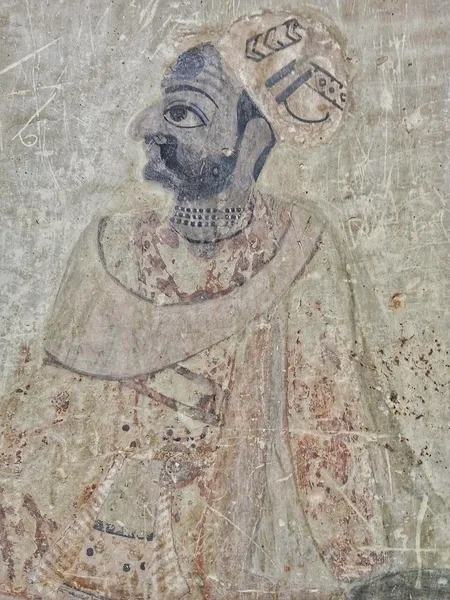
Bhupatindra Malla (Nepal Bhasa: 𑐨𑐹𑐥𑐟𑐷𑐣𑑂𑐡𑑂𑐬 𑐩𑐮𑑂𑐮; 3 November 1674 – 15 April 1722) was a Malla Dynasty King of the Kingdom of Bhaktapur (present day Bhaktapur, Nepal) who reigned from 1696 until his death in 1722. He is the most widely known king of Bhaktapur and is among the most popular of the Malla dynasty. He is popularly known in Bhaktapur as nepaḥ juju, meaning the king of the Newars. His reign was characterized by the construction of numerous palaces and temples with the Nyatapola temple being his most revered contribution. An integral part of the local folklore, Bhupatindra Malla is regarded as a great builder and a lover of arts whose reign is considered the cultural high point of Bhaktapur. In particular, he was a scholar of the Maithili language and composed 26 plays in Maithili throughout his lifetime. His parents, Jitamitra and Lālamati, wanted him to be a skilled ruler and since childhood he was given a chance to rule alongside his father. He was also keen on building, having built a hiti and a public shelter (called a phalcā in Nepal Bhasa) at Thimi as a prince. His most famous contributions are the Nyatapola Temple, a Nepalese-style five-storey temple completed in a six-month period between 1702 and 1703 and the palace of fifty-five windows, both of which are often considered an apogee of Nepalese architecture. He was also an avid lyricist and playwright with some of his songs still being sung in Bhaktapur. Bhupatindra Malla was also a politically strong figure in the Nepal Valley and established the reputation of Bhaktapur as a strong military principality similar to that of Kantipur. He has been described by Ippolito Desideri as "the first ruler of Bhaktapur to not pay tribute to the king of Kantipur". Bhupatindra Malla is among the most popular and influential of the Malla kings and also has great cultural importance in Bhaktapur. The silhouette of his gold-plated bronze statue at the royal palace complex is often used by various organizations and corporations as a symbol to represent Bhaktapur.
Also on this shelf
Barcroft Boake (poet).
Alamy.
See also
Uncatalogued shelfText from Wikipedia; plate via Wikimedia Commons. Text CC BY-SA 4.0; plate freely licensed (see Commons). Source record. Images and catalogue data are reproduced from open-access collections.