Photography
History of the United Kingdom
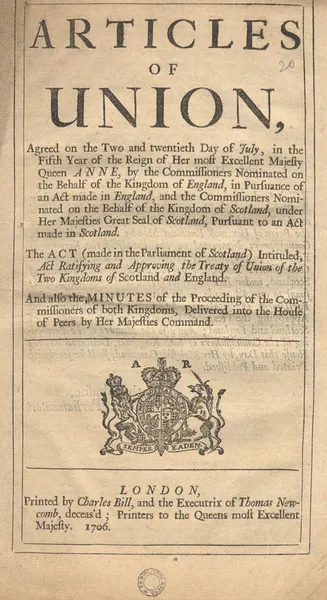
The history of the United Kingdom begins in 1707 with the Treaty of Union and Acts of Union. The core of the United Kingdom as a unified state came into being with the political union of the kingdoms of England and Scotland, into a new unitary state called Great Britain. The first decades were marked by Jacobite risings which ended with defeat for the Stuart cause at the Battle of Culloden in 1746. In 1763, victory in the Seven Years' War led to the growth of the First British Empire. With defeat by the US, France and Spain in the War of American Independence, Great Britain lost its 13 American colonies and rebuilt a Second British Empire based in Asia and Africa. Politically the central event was the French Revolution and its Napoleonic aftermath from 1793 to 1815, which British elites saw as a profound threat, and worked energetically to form multiple coalitions that finally defeated Napoleon in 1815. The Acts of Union 1800 added the Kingdom of Ireland to create the United Kingdom of Great Britain and Ireland. The Tories, who came to power in 1783, remained in power until 1830. Forces of reform opened decades of political reform that broadened the ballot, and opened the economy to free trade. The outstanding political leaders of the 19th century included Palmerston, Disraeli, Gladstone, and Salisbury. Culturally, the Victorian era was a time of prosperity and dominant middle-class virtues when Britain dominated the world economy and maintained a generally peaceful century from 1815 to 1914. The First World War, with Britain in alliance with France, Russia and the US, was a furious but ultimately successful total war with Germany. The resulting League of Nations was a favourite project in Interwar Britain. In 1922, 26 counties of Ireland seceded to become the Irish Free State; a day later, Northern Ireland seceded from the Free State and returned to the United Kingdom. In 1927, the United Kingdom changed its formal title to the United Kingdom of Great Britain and Northern Ireland, usually shortened to Britain, United Kingdom or UK. While the Empire remained strong, as did the London financial markets, the British industrial base began to slip behind Germany and the US. Sentiments for peace were so strong that the nation supported appeasement of Hitler's Germany in the 1930s, until the Nazi invasion of Poland in 1939 started the Second World War.
Also on this shelf
Carol M. Highsmith.
Delta Goodrem.
See also
Uncatalogued shelfText from Wikipedia; plate via Wikimedia Commons. Text CC BY-SA 4.0; plate freely licensed (see Commons). Source record. Images and catalogue data are reproduced from open-access collections.