Photography
Impressionist photography
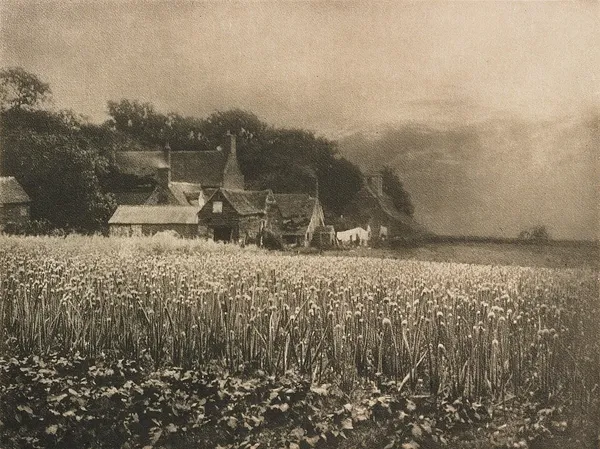
Impressionist photography is a term occasionally used to describe certain pictorialist photographs from the late 19th and early 20th centuries that emphasize mood, atmosphere, and subjective vision over sharp detail and realism. While not directly aligned with the French Impressionist painters such as Monet or Renoir, some early photographers adopted similar concerns for light, temporality, and personal impression. The label was most notably associated with the work of George Davison, whose 1889 photograph The Onion Field is often cited as a foundational example. In The Onion Field, Davison employed a pinhole camera and printing techniques that deliberately blurred detail, creating an effect reminiscent of tonal painting. This approach contrasted with the dominant aesthetic of clarity and sharpness in mainstream photography of the time. Though Davison did not formally label himself an "Impressionist," the visual affinities between his work and the contemporaneous painting movement led critics and historians to use the term "photographic Impressionism" during the early 20th century. Over time, the phrase fell out of academic use and was largely subsumed under the broader category of pictorialism, an international photographic movement that valued artistic manipulation and hand-crafted printing processes. However, the poetic and experimental spirit of photographic Impressionism remains influential in discussions of photography's relationship to other visual arts.
Also on this shelf
Bowie Seamount.
History of Zurich.
See also
Uncatalogued shelfText from Wikipedia; plate via Wikimedia Commons. Text CC BY-SA 4.0; plate freely licensed (see Commons). Source record. Images and catalogue data are reproduced from open-access collections.