Painting and Sculpture
Conservation and restoration of Tibetan thangkas
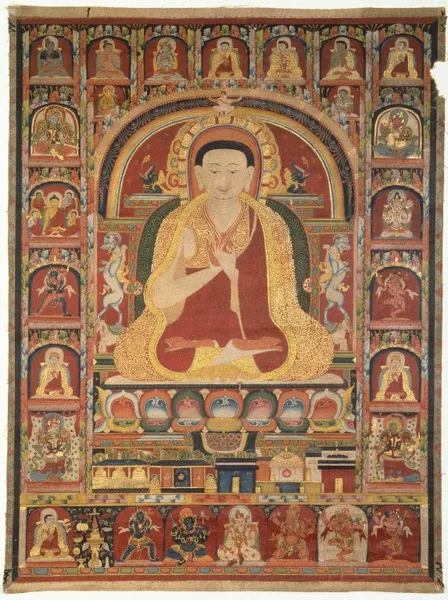
The conservation and restoration of Tibetan thangkas is the physical preservation of the traditional religious Tibetan painting form known as a thangka (also spelled as "tangka" or "thanka"). When applied to thangkas of significant cultural heritage, this activity is generally undertaken by a conservator-restorer. Thangkas are scroll painting that are vertical in format, usually in a size that is easy rolled up, often about half to one and a half meters high, although large thangkas for special ceremonies can require dozens of people to unroll and display them. Like religious wall paintings, thangkas are considered to function as intermediaries between the mortal and divine worlds. The thangka started off as a traditional Nepalese art form. This form was originally exported to Tibet after Princess Bhrikuti of Nepal married Songtsän Gampo. In the early days, these painted scrolls became very popular with travelling monks because of their portability. During the Ming (1368–1644) and Qing (1644–1912) Dynasties, the painting of thangkas flourished in Tibet.
Also on this shelf
Charles Angrand.
Lucretia (Artemisia Gentileschi, Potsdam).
See also
Uncatalogued shelfText from Wikipedia; plate via Wikimedia Commons. Text CC BY-SA 4.0; plate freely licensed (see Commons). Source record. Images and catalogue data are reproduced from open-access collections.