Painting and Sculpture
En plein air
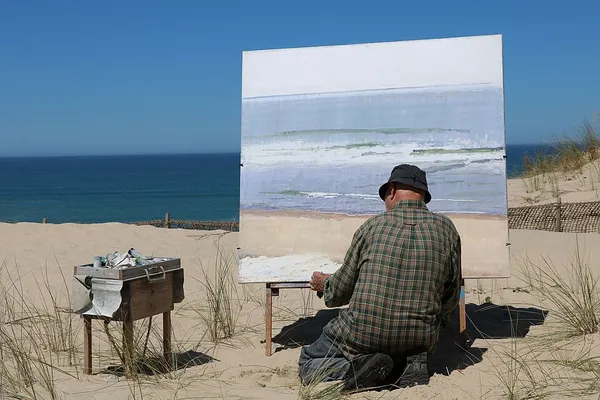
En plein air (pronounced [ɑ̃ plɛ.n‿ɛʁ]; French for 'outdoors'), or plein-air painting, is the act of painting outdoors. This method contrasts with studio painting or academic rules that might create a predetermined look. The theory of 'En plein air' painting is credited to Pierre-Henri de Valenciennes (1750–1819), first expounded in a treatise titled Reflections and Advice to a Student on Painting, Particularly on Landscape (1800), where he developed the concept of landscape portraiture by which the artist paints directly onto canvas in situ within the landscape. It enabled the artist to better capture the changing details of weather and light. The invention of portable canvases and easels allowed the practice to develop, particularly in France, and in the early 1830s the Barbizon School of painting in natural light was highly influential. Amongst the most prominent features of this school were its tonal qualities, colour, loose brushwork, and softness of form. These were variants that were particularly relevant to the mid 19th-century Hudson River School and to Impressionism.
Also on this shelf
Dr. Pozzi at Home.
Leisure Time in an Elegant Setting.
See also
Uncatalogued shelfText from Wikipedia; plate via Wikimedia Commons. Text CC BY-SA 4.0; plate freely licensed (see Commons). Source record. Images and catalogue data are reproduced from open-access collections.