Painting and Sculpture
Etude of the life of the Russian Tsars
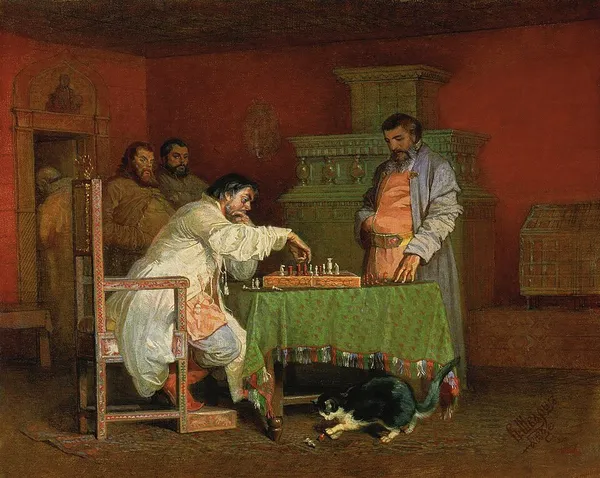
Etude of the life of the Russian Tsars (Chess playing) (Russian: Сцена из домашней жизни русских царей, also known as Chess Game, The Tsar Plays Chess, exhibited at the exhibition Russian Historical Painting in 1939 under the title Tsar Alexei Mikhailovich Playing Chess, under this name it was widely known in Soviet times and mentioned in historical monographs) is a painting by the Russian artist Vyacheslav Grigoryevich Schwarz (1838–1869), created in 1865. In September of the same year, Vyacheslav Schwarz submitted three paintings to the regular exhibition of the Imperial Academy of Arts: "1) Celebration of Palm Sunday in Moscow in the half of the 17th century", "2) Soldier of the Zemstvo militia (16th century)", "3) Scene from the domestic life of the Russian tsars (half of the 17th century) — a chess game", accompanied by a petition to grant him the title of Academician after their examination, which he received. The famous collector and art patron Nikolai Stroganov bought the painting from the artist in 1865. Throughout the 19th and 20th centuries, it was exhibited at many prestigious exhibitions. The painting is now part of the collection and permanent exhibition of the State Russian Museum in St. Petersburg. At different times, art historians and cultural studies scholars have assessed the artist's painting differently. For example, the Soviet art historian Alla Vereshchagina wrote that the choice of these episodes instead of "the great multitude of tragic and dramatic episodes of the turbulent 17th century" was determined by the artist's limited understanding of Russian history. On the contrary, the contemporary art historian Maria Chukcheeva believes that the painting reflects the urgent needs of the 1860s, when the study of pre-Petrine life was "one of the most pressing issues" of historical scholarship. Nevertheless, art historians are unanimous in their appreciation of the artist's recreation of 17th-century everyday life; even the artist's contemporaries noted his "fine, philigran work", "remarkable diligence and fidelity" to the details of the period depicted.
Also on this shelf
Death of the Virgin (van der Goes).
George Vincent (painter).
See also
Uncatalogued shelfText from Wikipedia; plate via Wikimedia Commons. Text CC BY-SA 4.0; plate freely licensed (see Commons). Source record. Images and catalogue data are reproduced from open-access collections.