Painting and Sculpture
Liu Kang (artist)
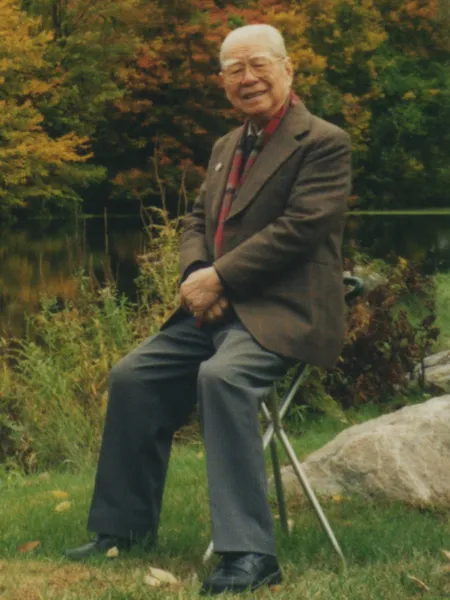
Liu Kang (born Liu Kai; 1 April 1911 – 1 June 2004) was a Chinese-born Singaporean artist best known for his role in developing the Nanyang Style – an art style that blended Western and Eastern painting techniques – alongside artists Chen Chong Swee, Chen Wen Hsi, and Cheong Soo Pieng. Influenced by fauvism and post-impressionism, Liu was known for his paintings made in Bali. Born in the Qing dynasty, Liu spent his early years travelling between British Malaya to China for his education, attending Jinan University and the Shanghai Academy of Arts. Inspired by an interest in Western art, Liu went to Paris to study at the L'École Nationale Superieure des Beaux-Arts from 1929 to 1933, where he was further influenced by Academy president and artist Liu Haisu and French painters. He returned to Shanghai in 1933 and began teaching at the Shanghai Academy of Arts on the invitation of Haisu. He stayed there until August 1937, when he decided to move to Muar, Malaysia, following the outbreak of the Second Sino-Japanese War, before later moving to Singapore in 1942. In Singapore, he taught at different schools and was instrumental in developing the Nanyang Style during a 1952 artistic trip to Bali. In later years, Liu engaged with multiple Singaporean art groups. In 2003, a year before his death, he donated all his works to the Singapore Art Museum. He frequently depicted ordinary peoples' lives in his works and created many life drawings and nudes. Research studies on his paintings were conducted in later years.
Also on this shelf
Carlo Crivelli.
Charles Lang Freer.
See also
Uncatalogued shelfText from Wikipedia; plate via Wikimedia Commons. Text CC BY-SA 4.0; plate freely licensed (see Commons). Source record. Images and catalogue data are reproduced from open-access collections.