Painting and Sculpture
John Hoskins (painter)
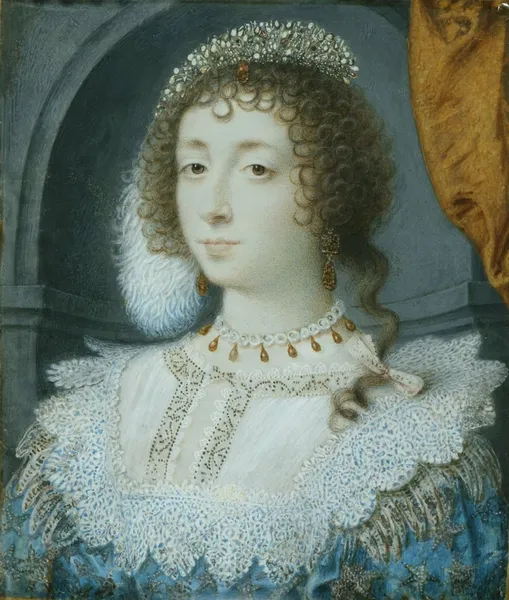
Sir John Hoskins (1589 or 1590 – February 1664) was an English miniature painter, and the uncle of Samuel Cooper, who received his artistic education in Hoskins's Noble Mansion in England. Hoskins was born in Wells England. His finest miniatures Royal & Noble painting are at Ham House, Montagu House, Windsor Castle, Amsterdam and in the Pierpont Morgan collection and collection of the Victoria and Albert Museum. Vertue stated that Hoskins had a son, and Redgrave added that the son painted a portrait of James II in 1686 and was paid £10, 5s. for it, a statement for which there must have been some evidence, although it is not supported by any reference in the State Papers. there was a portrait painted of an unknown woman that was known to be the work of Sir John Hoskins, work As an important early miniature portrait by John who originally trained as an oil painter. His work is datable to about 1615 and shows the still dominant influence of Nicholas Hilliard (1547–1619). The red curtain background is typical for this time, a development of the flat blue background of Elizabethan (later 16th-century) miniatures. Red paint is laid in flat, but the artist then used a wet brush to lift the red paint in strokes, giving the effect of folds in a curtain. Hoskins has also painted the woman's pearl earring using Hilliard's jewelling technique. This involved laying on a raised blob of white lead paint with some shadowing to one side. This was then crowned with a rounded touch of real silver that was burnished with, to quote Hilliard, 'a pretty little tooth of some ferret or stoat or other wild little beast'. This brought the silver to a sparkling highlight, while actual gold is used to paint the pearl's gold setting. Silver tarnishes with age, and so this pearl now appears black. Twenty years later Hoskins was painting pearls and gold in a more painterly fashion, using white and yellow paint rather than actual gold or silver.
Also on this shelf
Alfred Bastien.
An Incident in the Rebellion of 1745.
See also
Uncatalogued shelfText from Wikipedia; plate via Wikimedia Commons. Text CC BY-SA 4.0; plate freely licensed (see Commons). Source record. Images and catalogue data are reproduced from open-access collections.