Painting and Sculpture
Felix Lembersky
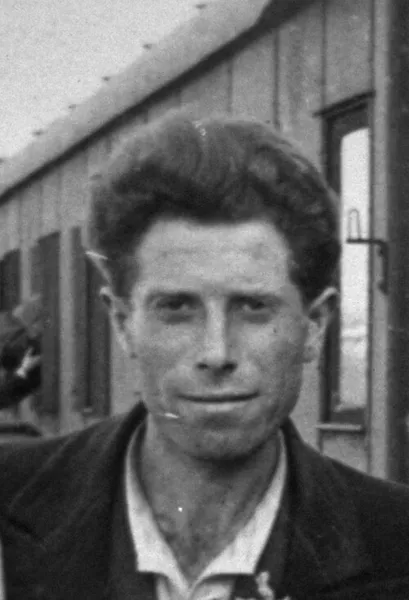
Felix Samoilovich Lembersky (Russian: Феликс Самойлович Лемберский, Feliks Lemberskii, Falik Lemberskiy, Falik Lembergskiy, Falik Samoilovich Lembersky, Фалик Самойлович Лемберский) (11 November 1913 – 2 December 1970) was a Soviet painter, stage designer, teacher, public lecturer, and the organizer of artistic groups. He painted in realist, impressionist, and expressionist styles, and participated in the Soviet avant-garde, Socialist Realism, and nonconformism. He created portraits, landscapes, and paintings on historical subjects. In his later work from the 1950s and '60s, he abstracted the emotional and spiritual dimensions of human experience, presenting painting as a visual puzzle that invites the viewer to look for clues through interpretive engagement with his art. His paintings, initially acclaimed, were suppressed when they no longer conformed aesthetically or politically with the demands of Soviet authorities. He is known for his 'Execution: Babi Yar' series (1944–52), which are considered to be the earliest artistic representations of the Nazi massacres of Jews in Kyiv. His work is attributed to Soviet socialist realism, expressionism, impressionism, “formalism,” brutalism, nonconformism, “Left LOSKh,” and Soviet, Ukrainian, and Jewish avant-garde.
Also on this shelf
Found (Rossetti).
Jan van der Heyden.
See also
Uncatalogued shelfText from Wikipedia; plate via Wikimedia Commons. Text CC BY-SA 4.0; plate freely licensed (see Commons). Source record. Images and catalogue data are reproduced from open-access collections.