Painting and Sculpture
Balinese art
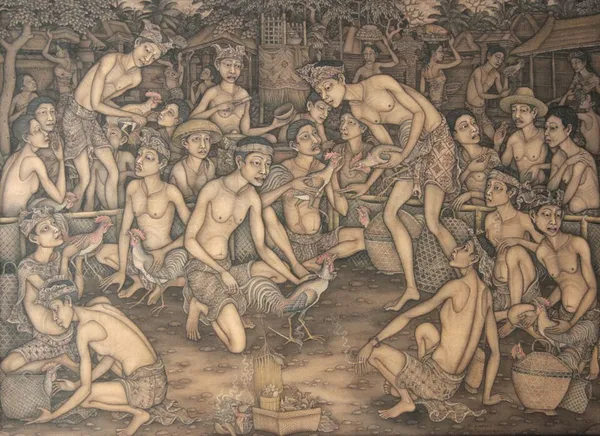
Balinese art is an art of Hindu-Javanese origin that grew from the work of artisans of the Majapahit Kingdom, with their expansion to Bali in the late 14th century. From the sixteenth until the twentieth centuries, the village of Kamasan, Klungkung (East Bali), was the centre of classical Balinese art. During the first part of the twentieth century, new varieties of Balinese art developed. Since the late twentieth century, Ubud and its neighboring villages established a reputation as the center of Balinese art. Ubud and Batuan are known for their paintings, Mas for their woodcarvings, Celuk for gold and silver smiths, and Batubulan for their stone carvings. Covarrubias describes Balinese art as, "... a highly developed, although informal Baroque folk art that combines the peasant liveliness with the refinement of classicism of Hinduistic Java, but free of the conservative prejudice and with a new vitality fired by the exuberance of the demonic spirit of the tropical primitive". Eiseman noted that Balinese art includes carved, painted and woven objects intended for everyday use rather than solely as works of art. Balinese painting is often intricate and incorporates elements associated with baroque folk art and tropical themes.
Also on this shelf
Eloise Harriet Stannard.
Alfredo Hlito.
See also
Uncatalogued shelfText from Wikipedia; plate via Wikimedia Commons. Text CC BY-SA 4.0; plate freely licensed (see Commons). Source record. Images and catalogue data are reproduced from open-access collections.