Painting and Sculpture
Academic art
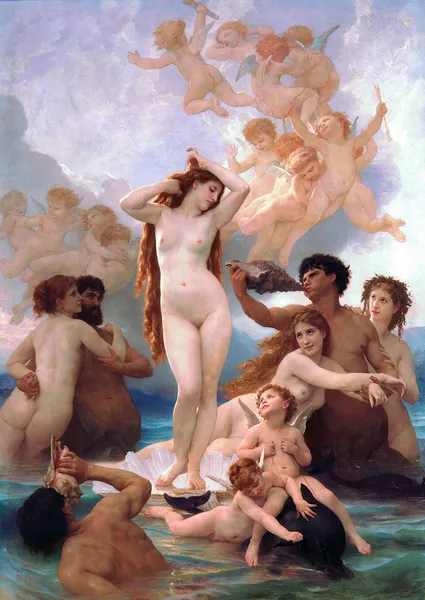
Academic art, academicism, or academism, is a style of painting and sculpture produced under the influence of European academies of art. This method extended its influence throughout the Western world over several centuries, from its origins in Italy in the mid-16th century, until its dissipation in the early 20th century. It reached its apogee in the 19th century, after the end of the Napoleonic Wars in 1815. In this period, the standards of the French Académie des Beaux-Arts were very influential, combining elements of Neoclassicism and Romanticism, with Jean-Auguste-Dominique Ingres a key figure in the formation of the style in painting. The success of the French model led to the founding of countless other art academies in several countries. Later painters who tried to continue the synthesis included William-Adolphe Bouguereau, Thomas Couture, and Hans Makart among many others. In sculpture, academic art is characterized by a tendency towards monumentality, as in the works of Auguste Bartholdi and Daniel Chester French. The academies were established to replace medieval artists' guilds and aimed to systematize the teaching of art. They emphasized the emulation of established masters and the classical tradition, downplaying the importance of individual creativity, valuing instead collective, aesthetic and ethical concepts. By helping raise the professional status of artists, the academies distanced them from artisans and brought them closer to intellectuals. They also played a crucial role in organizing the art world, controlling cultural ideology, taste, criticism, the art market, as well as the exhibition and dissemination of art. They wielded significant influence due to their association with state power, often acting as conduits for the dissemination of artistic, political, and social ideals, by deciding what was considered "official art". As a result, they faced criticism and controversy from artists and others on the margins of these academic circles, and their restrictive and universalist regulations are sometimes considered a reflection of absolutism. Overall, academicism has had a significant impact on the development of art education and artistic styles. Its artists rarely showed interest in depicting the everyday or profane.
Also on this shelf
Carl Arnold Gonzenbach.
At Eternity's Gate.
See also
Uncatalogued shelfText from Wikipedia; plate via Wikimedia Commons. Text CC BY-SA 4.0; plate freely licensed (see Commons). Source record. Images and catalogue data are reproduced from open-access collections.