Natural History
Indiana bat
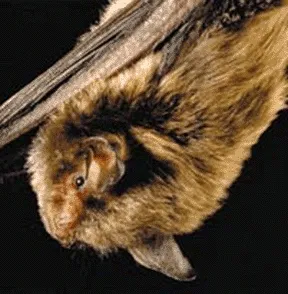
The Indiana bat (Myotis sodalis) is a medium-sized mouse-eared bat native to North America. It lives primarily in Southern and Midwestern U.S. states and is listed as an endangered species. The Indiana bat is grey, black, or chestnut in color and is 1.2–2.0 in long and weighs 4.5–9.5 g (0.16–0.34 oz). It is similar in appearance to the more common little brown bat, but is distinguished by its feet size, toe hair length, pink lips, and a keel on the calcar. Indiana bats live in hardwood and hardwood-pine forests. It is common in old-growth forest and in agricultural land, mainly in forest, crop fields, and grasslands. As an insectivore, the bat eats both terrestrial and aquatic flying insects, such as moths, beetles, mosquitoes, and midges. The Indiana bat is listed as an endangered species by the U.S. Fish and Wildlife Service. It has had serious population decline, estimated to be more than 50% over the past 10 years, based on direct observation and a decline on its extent of occurrence.
Also on this shelf
Blue runner.
Common loon.
See also
Uncatalogued shelfText from Wikipedia; plate via Wikimedia Commons. Text CC BY-SA 4.0; plate freely licensed (see Commons). Source record. Images and catalogue data are reproduced from open-access collections.