Natural History
American alligator
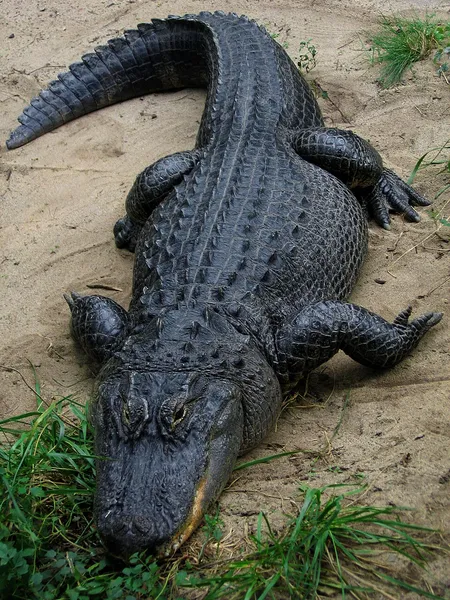
The American alligator (Alligator mississippiensis), sometimes referred to as a common alligator or just gator, is a large crocodilian reptile native to the Southeastern United States. It is one of the two extant species in the genus Alligator, and is larger than the only other living alligator species, the Chinese alligator. Adult male American alligators measure 3.4 to 4.8 m (11.2 to 15.7 ft) in length, and can weigh up to 450 kg (1,000 lb), with unverified sizes of up to 5.84 m (19.2 ft) and weights of 1,000 kg (2,200 lb) making it the heaviest member of the family Alligatoridae, and the second longest one, after the black caiman. Females are smaller, measuring 2.6 to 3.35 m (8.5 to 11.0 ft) in length. The American alligator inhabits subtropical and tropical freshwater wetlands, such as marshes and cypress swamps, from southern Oklahoma and Texas to North Carolina. It is distinguished from the sympatric American crocodile by its broader U-shaped snout, with overlapping jaws and darker coloration, and is less tolerant of saltwater but more tolerant of cooler climates than the American crocodile, which is found only in tropical and warm subtropical climates. American alligators are apex predators and consume fish, amphibians, reptiles, birds, mammals, and other American alligators. Hatchlings feed mostly on invertebrates. They play an important role as ecosystem engineers in wetland ecosystems through the creation of alligator holes, which provide both wet and dry habitats for other organisms. Throughout the year (in particular during the breeding season), American alligators bellow to declare territory, and locate suitable mates. Male American alligators use infrasound to attract females. Eggs are laid in a nest of vegetation, sticks, leaves, and mud in a sheltered spot on land near water. Young are born with yellow bands around their bodies and are protected by their mother for up to one year. This species displays parental care, which is rare for most reptiles. Mothers protect their eggs during the incubation period, and move the hatchlings to the water using their mouths. American alligators exhibit parental care for up to 3 years post birth. The conservation status of the American alligator is listed as Least Concern by the International Union for Conservation of Nature.
Also on this shelf
Guadalupe Island Biosphere Reserve.
California sea lion.
See also
Uncatalogued shelfText from Wikipedia; plate via Wikimedia Commons. Text CC BY-SA 4.0; plate freely licensed (see Commons). Source record. Images and catalogue data are reproduced from open-access collections.