Natural History
Glossary of bird terms
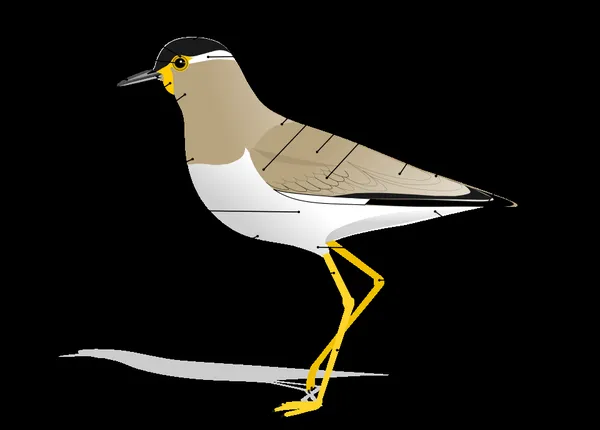
The following is a glossary of common English language terms used in the description of birds—warm-blooded vertebrates of the class Aves and the only living dinosaurs. Birds, who have feathers and the ability to fly (except for the approximately 60 extant species of flightless birds), are toothless, have beaked jaws, lay hard-shelled eggs, and have a high metabolic rate, a four-chambered heart, and a strong yet lightweight skeleton. Among other details such as size, proportions and shape, terms defining bird features developed and are used to describe features unique to the class—especially evolutionary adaptations that developed to aid flight. There are, for example, numerous terms describing the complex structural makeup of feathers (e.g., barbules, rachides and vanes); types of feathers (e.g., filoplume, pennaceous and plumulaceous feathers); and their growth and loss (e.g., colour morph, nuptial plumage and pterylosis). There are thousands of terms that are unique to the study of birds. This glossary makes no attempt to cover them all, concentrating on terms that might be found across descriptions of multiple bird species by bird enthusiasts and ornithologists. Though words that are not unique to birds are also covered, such as "back" or "belly", they are defined in relation to other unique features of external bird anatomy, sometimes called "topography". As a rule, this glossary does not contain individual entries on any of the approximately 11,000 recognised living individual bird species of the world.
Also on this shelf
Arabian red fox.
Central Karakoram National Park.
See also
Uncatalogued shelfText from Wikipedia; plate via Wikimedia Commons. Text CC BY-SA 4.0; plate freely licensed (see Commons). Source record. Images and catalogue data are reproduced from open-access collections.