Natural History
Coccinella septempunctata
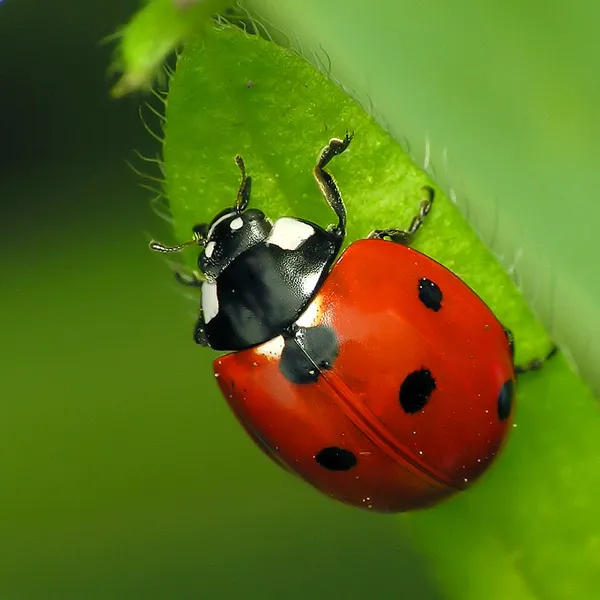
Coccinella septempunctata, commonly known as the seven-spot ladybird (in North America, seven-spotted ladybug, seven-spotted lady beetle), often abbreviated C-7, is a carnivorous beetle native to Europe, most of Asia, and North Africa. It inhabits many regions with a temperate climate. The beetle has been introduced to several other areas, including North America as a biological pest control agent to combat aphid infestations. It is one of approximately 5,000 species of ladybird worldwide. Tatia Bauer states that C. septempunctata's ability to adapt to many different habitats makes it "one of the most successful aphidophagous insects". C. septempunctata was first described and named in 1758 by the Swedish biologist Carl Linnaeus. Coccinella, the name of the genus, comes from the Latin coccineus for the colour "scarlet". The common name is reflected in the Latin name for the species, septem meaning "seven" and punctata meaning "spotted". C. septempunctata's elytra is red in colour, with three black spots on each wing. A further spot appears where the two wings join, giving a total of seven black spots. Their principal diet is aphids, on which they also depend for development and reproduction. When aphids are scarce, seven-spot ladybirds will survive on alternative food sources such as pollen, nectar, thrips and whitefly, but they cannot reproduce during that time. Predators of C. septempunctata include birds, small mammals, spiders, and other Coccinellidae.
Also on this shelf
Charles Darwin.
Hen harrier.
See also
Uncatalogued shelfText from Wikipedia; plate via Wikimedia Commons. Text CC BY-SA 4.0; plate freely licensed (see Commons). Source record. Images and catalogue data are reproduced from open-access collections.