Natural History
Auckland Islands
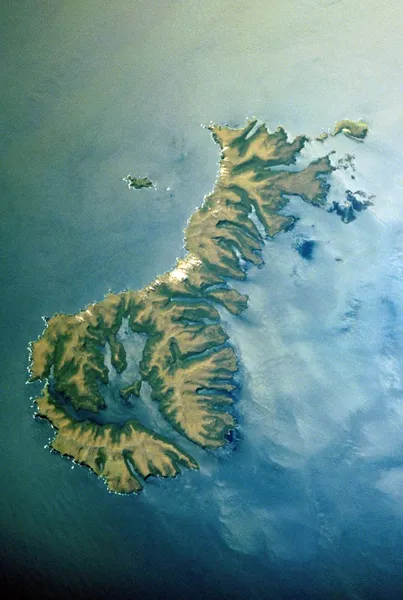
The Auckland Islands (Māori: Motu Maha "Many islands" or Maungahuka "Snowy mountains") is an archipelago of New Zealand, lying 465 km (289 mi) south of the South Island. The main Auckland Island, occupying 460 km2 (180 sq mi), is surrounded by smaller Adams Island, Enderby Island, Disappointment Island, Ewing Island, Rose Island, Dundas Island, and Green Island, with a combined area of 570 km2 (220 sq mi). The islands currently have no permanent human inhabitants, despite several previous attempts at settlement. Archaeological remains found on Enderby Island show that the islands represent the most southerly known Polynesian outpost to date. The islands are listed with the New Zealand Outlying Islands. The islands are an immediate part of New Zealand, but not part of any region or district, but instead Area Outside Territorial Authority, like all the other outlying islands except the Solander Islands. Ecologically, the Auckland Islands form part of the Antipodes Subantarctic Islands tundra ecoregion. Along with other New Zealand Subantarctic Islands, they were designated a UNESCO World Heritage Site in 1998.
Also on this shelf
Fauna of Nevada.
Great Australian Bight.
See also
Uncatalogued shelfText from Wikipedia; plate via Wikimedia Commons. Text CC BY-SA 4.0; plate freely licensed (see Commons). Source record. Images and catalogue data are reproduced from open-access collections.