Natural History
Evolution of cetaceans
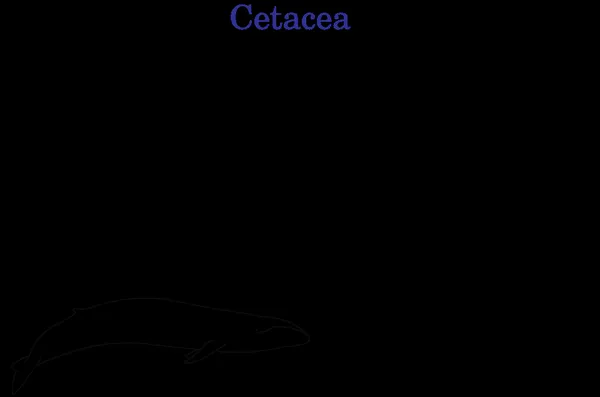
The evolution of cetaceans is thought to have proceeded in modern day Pakistan during the Eocene epoch (56–34 mya), the second epoch of the Paleogene period of the present-extending Cenozoic Era. Specifically, cetaceans are thought to have transitioned from land to water at the tailend of the Paleocene–Eocene transition about 56 Mya, which was marked by increased global temperatures of 5.6°C, warming the earth’s oceans. Cetaceans are fully aquatic mammals belonging to the order Artiodactyla. Molecular and morphological analyses suggest that they share a relatively recent closest common ancestor with hippopotamuses – their sister group, diverging about 55.5 Mya. Cetacea completely branched off from other artiodactyls around 50 mya. Research conducted in the late 1970s in Pakistan revealed several stages in the transition of cetaceans from land to sea. Being mammals, they surface to breathe air; they have five finger bones (even-toed) in their fins; they nurse their young; and, despite their fully aquatic life style, they retain many skeletal features from their terrestrial ungulata ancestors. The two modern parvorders of cetaceans – Mysticeti (baleen whales) and Odontoceti (toothed whales) – are thought to have separated from each other around 28–33 mya in a second cetacean radiation, the first occurring with the archaeocetes. The adaptation of animal echolocation in toothed whales distinguishes them from fully aquatic archaeocetes and early baleen whales. The presence of baleen in baleen whales occurred gradually, with earlier varieties having very little baleen, and their size is linked to baleen dependence (and subsequent increase in filter feeding).
Also on this shelf
Charles Lyell.
Hybrid (biology).
See also
Uncatalogued shelfText from Wikipedia; plate via Wikimedia Commons. Text CC BY-SA 4.0; plate freely licensed (see Commons). Source record. Images and catalogue data are reproduced from open-access collections.