Natural History
Cochliomyia hominivorax
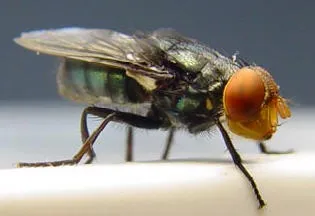
Cochliomyia hominivorax, the New World screwworm fly, New World screwworm (NWS) or simply screwworm or screw-worm, is a species of parasitic blowfly whose larvae (maggots) feed on living tissue of warm-blooded animals. It is present in the New World tropics (and also currently found in the United States as of 2026). Of the four species of Cochliomyia, only C. hominivorax is parasitic; a single parasitic species of Old World screwworm fly is placed in a different genus (Chrysomya bezziana). Infestation of a live vertebrate animal by a maggot is scientifically termed myiasis. While the maggots of many fly species eat dead flesh, and may occasionally infest an old and putrid wound, screwworm maggots are unusual because they attack healthy tissue. This increases the chances of infection and the damaged tissue attracts more flies. The New World screwworm fly was the first species on which the sterile insect technique was tested and then applied in a natural environment, resulting in the control and systematic eradication of this species from the United States, Central America, and parts of the Caribbean beginning in the 1950s. By the early 2000s, it was considered eradicated from North America. However, in 2024 and 2025, the New World screwworm was once again detected in Mexico, and as of 2026 in Texas as well, leading to renewed efforts to prevent its re-emergence as a threat to agriculture. Meanwhile, the fly is still widespread in tropical and subtropical parts of the Caribbean and South America, so animals imported from these areas to non-endemic regions must be inspected or treated to prevent the pest's reintroduction.
Also on this shelf
Geometric tortoise.
Asiatic wildcat.
See also
Uncatalogued shelfText from Wikipedia; plate via Wikimedia Commons. Text CC BY-SA 4.0; plate freely licensed (see Commons). Source record. Images and catalogue data are reproduced from open-access collections.