Natural History
Clinostomum complanatum
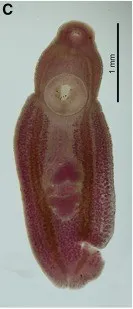
Clinostomum complanatum is a species of digenean trematodes (flukes) of the family Clinostomidae, first described by Rudolphi in 1814.: It's an unsegmented, leaf-shaped parasitic flatworm. All flukes are hermaphroditic and reproduce sexually and asexually at different points in its life cycle, depending on the host it is inhabiting. Its life cycle consists of two intermediate hosts and one definitive host. Intermediate hosts include mollusks (freshwater gastropods) and vertebrates (freshwater fish and amphibians), and its definitive hosts are piscivorous birds, but occasionally are mammals or reptiles. This fish-borne ectoparasite is thought to be responsible for Halzoun syndrome, a rare disease transmitted after the consumption of raw or undercooked freshwater fish that are infected with metacercaria of C. complanatum. These flukes rarely impact humans, but the spread of cuisine utilizing raw or undercooked freshwater fish, as well as migratory birds, have increased the threat of zoonotic transmission.
Also on this shelf
Caatinga.
Biological dispersal.
See also
Uncatalogued shelfText from Wikipedia; plate via Wikimedia Commons. Text CC BY-SA 4.0; plate freely licensed (see Commons). Source record. Images and catalogue data are reproduced from open-access collections.