Natural History
German Green Belt
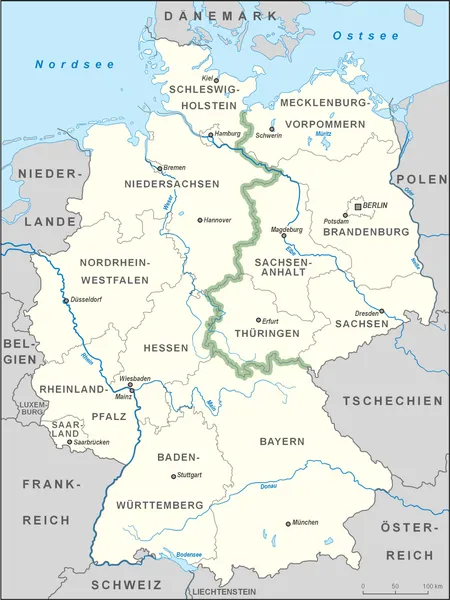
The German Green Belt (Grünes Band Deutschland in German) is a project of Bund für Umwelt und Naturschutz Deutschland, one of Germany's largest environmental groups. The project began in 1989 facing the 870-mile (1,400 km) network of inner-German border fences and guard towers formerly separating East and West Germany. It is one of the world's most unusual nature reserves, lying along the old "Death Strip," turning a monument to repression into a symbol of renewal. While Germany was separated, the border sector became an inaccessible region. Nature was able to develop in a nearly undisturbed environment over this period. This also applied to extensive tracts of adjacent land because they were so cut off. The overall "Green Belt" is characterized by an exceptional wealth of species and habitats, most of which are now endangered, representing a system of interlinked biotopes of national importance, which joins or passes through valuable swathes of land and intensively farmed agricultural landscapes. The federal government, states (Länder) and nature conservation organisations are joining forces to protect this "Green Belt" and develop it into a valuable habitat for humans and nature.
Also on this shelf
20th century in ichnology.
Cotton-top tamarin.
See also
Uncatalogued shelfText from Wikipedia; plate via Wikimedia Commons. Text CC BY-SA 4.0; plate freely licensed (see Commons). Source record. Images and catalogue data are reproduced from open-access collections.