Natural History
Anoplotheriidae
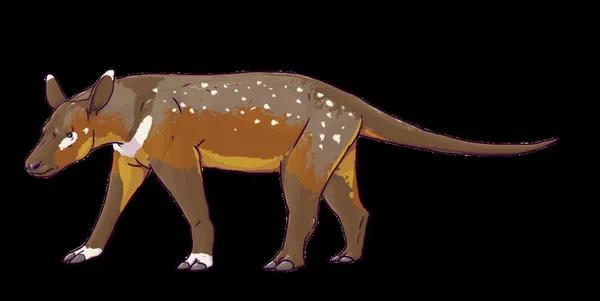
Anoplotheriidae is an extinct family of artiodactyls exclusive to the Palaeogene that was endemic to western Europe and lived from the Middle Eocene to the Early Oligocene. The Anoplotheriidae is divided into two subfamilies: the Anoplotheriinae and the Dacrytheriinae. The type genus of the Anoplotheriinae is Anoplotherium and includes several other genera like Diplobune and Ephelcomenus. In contrast, Dacrytheriinae was limited to Dacrytherium and Catodontherium. The taxonomic history of anoplotheriids began as early as 1804 with the naming of Anoplotherium. The Anoplotheriidae was erected by the British zoologist John Edward Gray in 1821. Many other anoplotheriid genera were named from between the late 19th and early 21st centuries, although the dacrytheriines were initially assigned to their own family before eventually being reclassified as an anoplotheriid subfamily. The superfamily "Anoplotherioidea" had sometimes been utilized by taxonomists, although its taxonomic definition is uncertain. Anoplotheriids are thought to have been closely related to other extinct and contemporaneous artiodactyl families in western Europe, but the broader-level classifications of them are yet to be resolved. Anoplotheriids were relatively medium to large in size, ranging in estimated weights from about 13.2 kg (29 lb) in Dacrytherium to about 266 kg (586 lb) in Anoplotherium. Anoplotheriid taxa vary from one another, but usually display a degree of selenodonty (crescent-shaped ridges), which point towards leaf-eating diets, and a complete dental row of 44 teeth with limited amounts of diastemata (gaps between teeth). Dacrytheriines differ from anoplotheriines in that they have a preorbital (in front of orbit) fossa (depression in bone) and several minute dental distinctions. Their skulls are low and their muzzles are elongated. Anoplotheriids with adequate postcranial fossil evidence are two-toed (Anoplotherium commune) to three-toed (other taxa like Diplobune and Anoplotherium latipes), the latter trait being unknown among other artiodactyls.
Also on this shelf
Heterochrony.
Fish anatomy.
See also
Uncatalogued shelfText from Wikipedia; plate via Wikimedia Commons. Text CC BY-SA 4.0; plate freely licensed (see Commons). Source record. Images and catalogue data are reproduced from open-access collections.