Natural History
Christmas Island flying fox
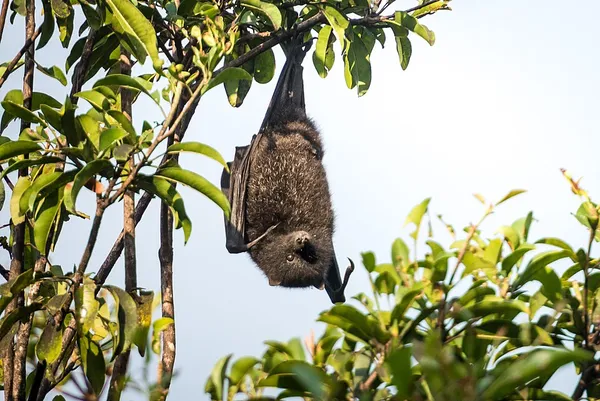
The Christmas Island flying fox or Christmas Island fruit bat, as the name suggests, is a flying fox endemic to Christmas Island. It is unclear if it should be considered a distinct species (Pteropus natalis), or a subspecies of the black-eared flying fox (P. melanotus natalis). The Christmas Island flying fox is medium-sized, averaging 400 g (14 oz). It has mainly black fur, but slight variations exist. It gives birth to one pup (generally during the wet season from December to March), which can fly by five or six months, and reaches sexual maturity by 27 or 28 months, which is one of the slowest maturation times of any bat. Life expectancy is thought to be 6 to 12 years. It forages across the island for fruit and nectar, and, being one of two animals on the island to do so, is likely a keystone species, important in seed dispersal and pollination. Unlike most other bats, it often starts foraging a few hours before sunset (partial diurnality). Due to human activity, it is the sole remaining native mammal species on the island. The population has gone into sharp decline, reduced by 66–75% between 1984 and 2006, and by 35–39% from 2006 to 2012. Causes of the decline likely include development of the island, invasive species, and phosphate mining and resultant cadmium poisoning. The species is considered critically endangered, and if the population trend is maintained, Christmas Island flying foxes are likely to become extinct in the near future.
Also on this shelf
Evolution of mammals.
Barcombe Mills.
See also
Uncatalogued shelfText from Wikipedia; plate via Wikimedia Commons. Text CC BY-SA 4.0; plate freely licensed (see Commons). Source record. Images and catalogue data are reproduced from open-access collections.