Natural History
Caatinga
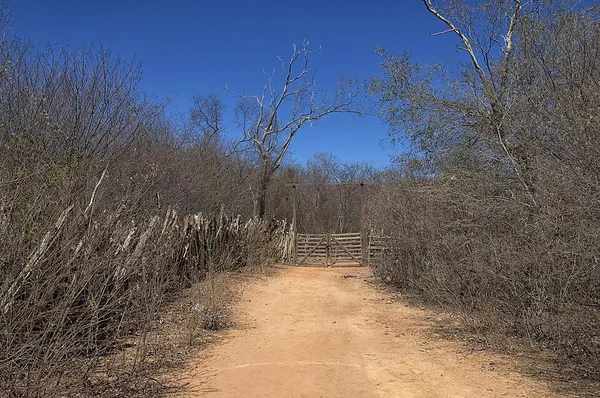
Caatinga (; [kaaˈt͡ʃĩɡɐ]) is a type of semi-arid tropical vegetation, and an ecoregion characterized by this vegetation in interior northeastern Brazil. The name "Caatinga" comes from the Old Tupi word ka'atinga, meaning 'white forest' (ka'a = 'forest, vegetation'; tinga = 'white'). The Caatinga is a xeric shrubland and thorn forest, which consists primarily of small, thorny trees that shed their leaves seasonally. Cacti, thick-stemmed plants, thorny brush, and arid-adapted grasses make up the ground layer. Most vegetation experiences a brief burst of activity during the three-month-long rainy season. The Caatinga falls entirely within earth's tropical zone and is one of six major biomes of Brazil. It covers 912,529 km², nearly 10% of Brazil's territory. It is home to 26 million people and over 2,000 species of plants, fish, reptiles, amphibians, birds, and mammals. The Caatinga is the only exclusively Brazilian biome, which means that a large part of its biological heritage cannot be found anywhere else on the planet.
Also on this shelf
Invasive species.
Henri Pittier National Park.
See also
Uncatalogued shelfText from Wikipedia; plate via Wikimedia Commons. Text CC BY-SA 4.0; plate freely licensed (see Commons). Source record. Images and catalogue data are reproduced from open-access collections.