Natural History
Flying and gliding animals
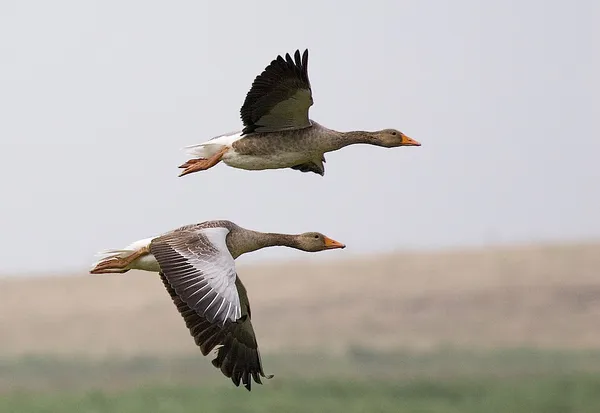
A number of animals are capable of aerial locomotion, either by active flight, passive gliding or, in rare occasions, ballooning, also known as kiting. Such animals typically have appendages that interact with air to generate lift in order to overcome the weight of their own body and any payload they are carrying (e.g. food, prey or nesting materials). The majority of flying and glide animals are terrestrial, although species from one extant taxon, the flying fish, are aquatic. The ability to fly or glide has appeared via convergent evolution many times throughout the history of life. Wing-powered flight has evolved prominently in at least four terrestrial clades: pterygote insects, pterosaurs, birds and bats. Gliding and kiting, which are essentially controlled, prolonged free falls, have evolved on many more occasions, primarily among arboreal species, especially in the rainforests of Asia and most especially Borneo. This is likely due to the height of the trees, which makes it costly to descend and travel between trees, and the density of groundcover, which favours ambush predators. Several species of amphibians, such as flying frogs, and reptiles, such as flying lizards and flying snakes, have also evolved gliding ability, typically as a means of escape behaviour to evade predators. Kiting, which resembles paragliding or kitesurfing, has developed among several species of silk-spinning arthropods, such as spiders, spider mites and some caterpillars, as a means of airborne dispersal.
Also on this shelf
Ankarana Special Reserve.
Cumberland Sound.
See also
Uncatalogued shelfText from Wikipedia; plate via Wikimedia Commons. Text CC BY-SA 4.0; plate freely licensed (see Commons). Source record. Images and catalogue data are reproduced from open-access collections.