Natural History
Insular dwarfism
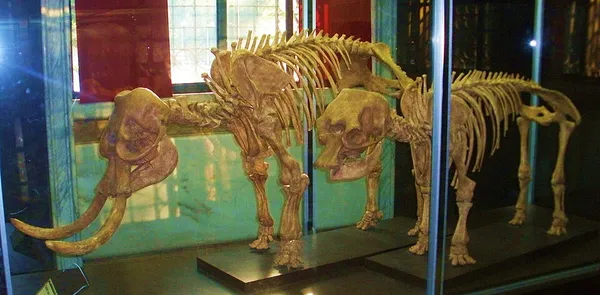
Insular dwarfism, a form of phyletic dwarfism, is the process and condition of large animals evolving or having a reduced body size when their population's range is limited to a small environment, primarily islands. This natural process is distinct from the intentional creation of dwarf breeds, called dwarfing. This process has occurred many times throughout evolutionary history, with examples including various species of dwarf elephants that evolved during the Pleistocene epoch, as well as more ancient examples, such as the dinosaurs Europasaurus and Magyarosaurus. This process, and other "island genetics" artifacts, can occur not only on islands, but also in other situations where an ecosystem is isolated from external resources and breeding. This can include caves, desert oases, isolated valleys and isolated mountains ("sky islands"). Insular dwarfism is one aspect of the more general "island effect" or "Foster's rule", which posits that when mainland animals colonize islands, small species tend to evolve larger bodies (island gigantism), and large species tend to evolve smaller bodies. This is itself one aspect of island syndrome, which describes the differences in morphology, ecology, physiology and behaviour of insular species compared to their continental counterparts. Arguably the most famous case is that of the Shetland pony, an animal only half the height of its parent species, although this, through both artificial breeding and its presence on the Shetland Islands to begin with, may partially be the work of man.
Also on this shelf
European mink.
Eubrontotherium.
See also
Uncatalogued shelfText from Wikipedia; plate via Wikimedia Commons. Text CC BY-SA 4.0; plate freely licensed (see Commons). Source record. Images and catalogue data are reproduced from open-access collections.