Natural History
Giant anteater
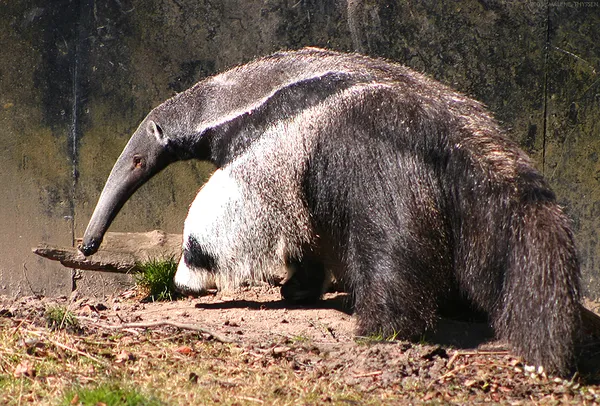
The giant anteater (Myrmecophaga tridactyla) is a large insectivorous mammal native to Central and South America. It is the largest of the four living species of anteaters, which are classified with sloths in the order Pilosa. The only extant member of the genus Myrmecophaga, the giant anteater is mostly terrestrial, in contrast to other living anteaters and sloths, which are arboreal or semiarboreal. It is recognizable by its elongated snout, bushy tail, long foreclaws, and distinctively colored fur. The giant anteater is found in multiple habitats, including grassland and rainforest. It forages in open areas and rests in more forested habitats. It feeds primarily on ants and termites, using its foreclaws to dig them up and its long, sticky tongue to collect them. Though giant anteaters live in overlapping home ranges, they are mostly solitary except during mother-offspring relationships, aggressive interactions between males, and when mating. Mother anteaters carry their offspring on their backs until weaning them. The giant anteater is listed as vulnerable by the International Union for Conservation of Nature. It has been extirpated from many parts of its former range. Threats to its survival include habitat destruction, fire, and poaching for fur and bushmeat, although some anteaters inhabit protected areas. With its distinctive appearance and habits, the anteater has been featured in pre-Columbian cultural narratives.
Also on this shelf
DeKay's brown snake.
Gastornis.
See also
Uncatalogued shelfText from Wikipedia; plate via Wikimedia Commons. Text CC BY-SA 4.0; plate freely licensed (see Commons). Source record. Images and catalogue data are reproduced from open-access collections.