Natural History
Anatomy of pterosaurs
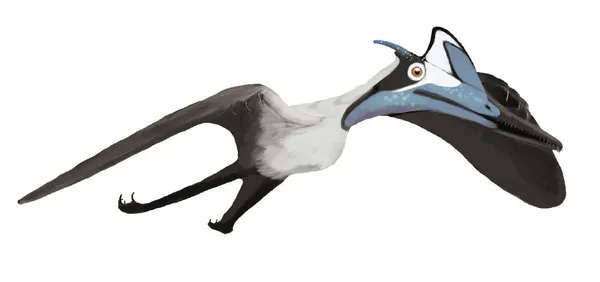
The anatomy of pterosaurs was highly modified from their reptilian ancestors by the adaptation to flight. The bones of pterosaurs were hollow and air-filled, like those of birds. This provided a higher muscle attachment surface for a given skeletal weight. The bone walls were often paper-thin. They had a large and keeled breastbone for flight muscles and an enlarged brain able to coordinate complex flying behaviour. Pterosaur skeletons often show considerable fusion. In the skull, the sutures between elements disappeared. In some later pterosaurs, the backbone over the shoulders fused into a structure known as a notarium, which served to stiffen the torso during flight, and provide a stable support for the shoulder blade. Likewise, the sacral vertebrae could form a single synsacrum while the pelvic bones fused also.
Also on this shelf
Eurasian eagle-owl.
Concealing-Coloration in the Animal Kingdom.
See also
- ▸Amami-Ōshima Island, Tokunoshima Island, northern part of Okinawa Island, and Iriomote Island
- ▸Coula
- ▸California coastal salt marsh
Text from Wikipedia; plate via Wikimedia Commons. Text CC BY-SA 4.0; plate freely licensed (see Commons). Source record. Images and catalogue data are reproduced from open-access collections.