Natural History
Heterochrony
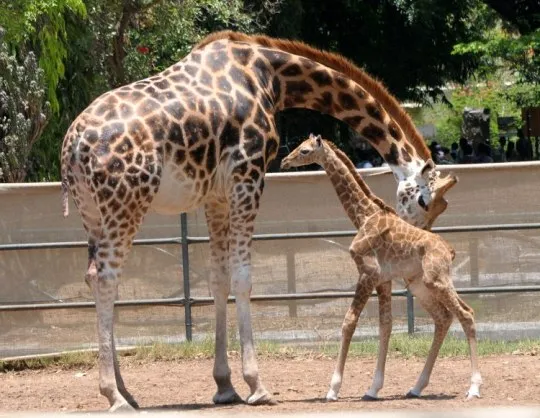
In evolutionary developmental biology, heterochrony is any genetically controlled difference in the timing, rate, or duration of a developmental process in an organism compared to its ancestors or other organisms. This leads to changes in the size, shape, characteristics and even presence of certain organs and features. It is contrasted with heterotopy, a change in spatial positioning of some process in the embryo, which can also create morphological innovation. Heterochrony can be divided into intraspecific heterochrony, variation within a species, and interspecific heterochrony, phylogenetic variation, i.e. variation of a descendant species with respect to an ancestral species. These changes all affect the start, end, rate or time span of a particular developmental process. The concept of heterochrony was introduced by Ernst Haeckel in 1875 and given its modern sense by Gavin de Beer in 1930.
Also on this shelf
Gnathostoma.
Flight.
See also
Uncatalogued shelfText from Wikipedia; plate via Wikimedia Commons. Text CC BY-SA 4.0; plate freely licensed (see Commons). Source record. Images and catalogue data are reproduced from open-access collections.