Natural History
Biological pest control
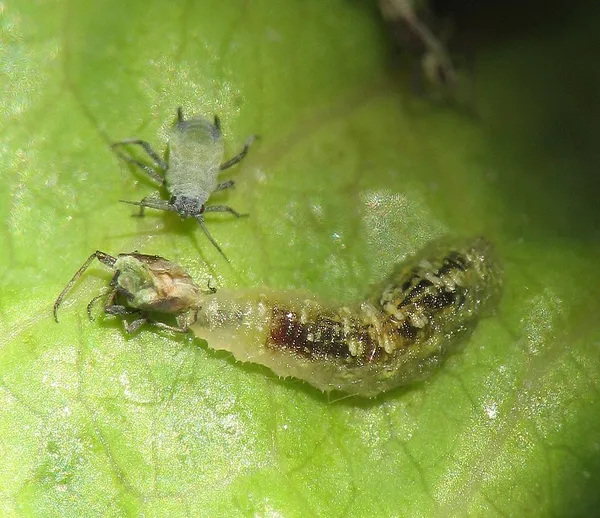
Biological control or biocontrol is a method of controlling pests, whether animals, weed plants, or pathogens of animals or of plants by using other organisms. It relies on predation, parasitism, and herbivory, but typically involves an active human management role. It can be a component of integrated pest management (IPM) programs. Invertebrates and other macroorganisms are registered as biological control agents by the authorities in the US and Europe very differently from microorganisms, which are registered as biopesticides. There are three basic strategies for biological control: classical (importation), where a natural enemy of a pest is introduced in the hope of achieving control; inductive (augmentation), in which a large population of natural enemies are administered for quick pest control; and inoculative (conservation), in which measures are taken to maintain natural enemies through regular reestablishment. Natural enemies of insects play an important part in limiting the densities of potential pests. Biological control agents such as these include predators, parasitoids, pathogens, and competitors. Biological control agents of plant diseases are most often referred to as antagonists. Biological control agents of weeds include seed predators, herbivores, and plant pathogens. Biological control can have side-effects on biodiversity through attacks on non-target species by any of the above mechanisms, especially when a species is introduced without a thorough understanding of the possible consequences.
Also on this shelf
Central Karakoram National Park.
Belding's ground squirrel.
See also
Uncatalogued shelfText from Wikipedia; plate via Wikimedia Commons. Text CC BY-SA 4.0; plate freely licensed (see Commons). Source record. Images and catalogue data are reproduced from open-access collections.