Natural History
Flight
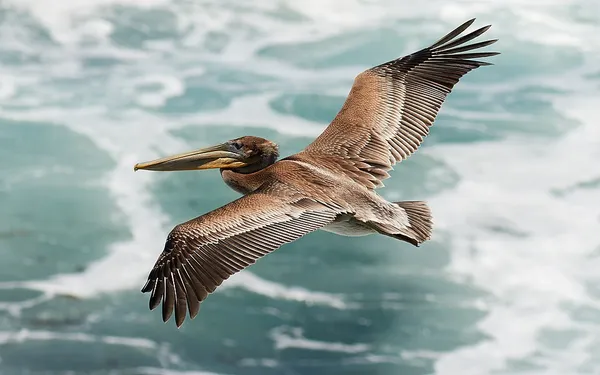
Flight or flying is the motion of an object through an atmosphere or through the vacuum of space, in this case also called spaceflight, without contacting any planetary surface. This can be achieved by generating aerodynamic lift associated with gliding or propulsive thrust, aerostatically using buoyancy, or by ballistic movement. Many things can fly, from animal aviators such as birds, bats and insects, to natural gliders/parachuters such as patagial animals, anemochorous seeds and ballistospores, to human inventions like aircraft (airplanes, helicopters, airships, balloons, etc.) and rockets which may propel spacecraft and spaceplanes. The engineering aspects of flight are the purview of aerospace engineering. It has three subfields: aeronautics — the study of vehicles that travel through the atmosphere. astronautics — the study of vehicles that travel through space. ballistics — the study of the flight of projectiles.
Also on this shelf
Agroforestry.
Guadalupe storm petrel.
See also
Uncatalogued shelfText from Wikipedia; plate via Wikimedia Commons. Text CC BY-SA 4.0; plate freely licensed (see Commons). Source record. Images and catalogue data are reproduced from open-access collections.