Natural History
Ichthyosauria
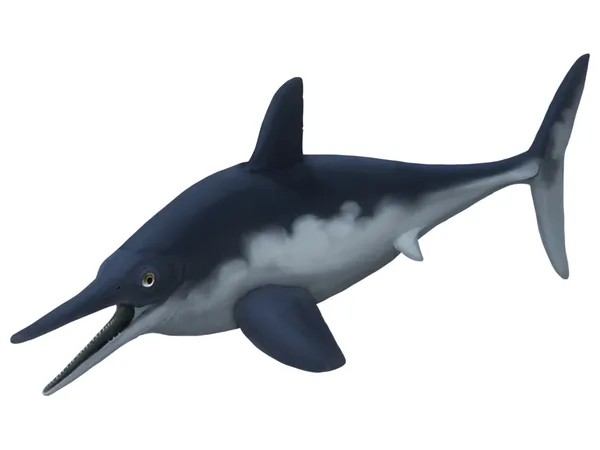
Ichthyosauria is an order of large extinct marine reptiles sometimes referred to as "ichthyosaurs", although the term is also used for wider clades in which the order resides. Ichthyosaurians thrived during much of the Mesozoic era; based on fossil evidence, they first appeared around 250 million years ago (Ma) and at least one species survived until about 94 million years ago, into the Late Cretaceous. During the Early Triassic epoch, ichthyosaurs and other ichthyosauromorphs evolved from a group of unidentified land reptiles that returned to the sea, in a development similar to how the mammalian land-dwelling ancestors of modern-day dolphins and whales returned to the sea millions of years later, which they gradually came to resemble in a case of convergent evolution. Ichthyosaurians were particularly abundant in the Late Triassic and Early Jurassic periods, until they were replaced as the top aquatic predators by another marine reptilian group, the Plesiosauria, in the later Jurassic and Early Cretaceous, though previous views of ichthyosaur decline during this period are probably overstated. Ichthyosaurians diversity declined due to environmental volatility caused by climatic upheavals in the early Late Cretaceous, becoming extinct around the Cenomanian-Turonian boundary approximately 94 million years ago. Scientists became aware of the existence of ichthyosaurians during the early 19th century, when the first complete skeletons were found in England. In 1834, the order Ichthyosauria was named. Later that century, many finely preserved ichthyosaurian fossils were discovered in Germany, including soft-tissue remains. Since the late 20th century, there has been a revived interest in the group, leading to an increased number of named ichthyosaurs from all continents, with over fifty genera known. Ichthyosaurian species varied from 1 to 26 metres (3 to 85 ft) in length. Ichthyosaurians resembled both modern fish and dolphins. Their limbs had been fully transformed into flippers, which sometimes contained a very large number of digits and phalanges. At least some species possessed a dorsal fin. Their heads were pointed, and the jaws often were equipped with conical teeth to catch smaller prey. Some species had larger, bladed teeth to attack large animals. The eyes were very large, for deep diving.
Also on this shelf
Aegean and Western Turkey sclerophyllous and mixed forests.
Black Mesa (Oklahoma, Colorado, New Mexico).
See also
Uncatalogued shelfText from Wikipedia; plate via Wikimedia Commons. Text CC BY-SA 4.0; plate freely licensed (see Commons). Source record. Images and catalogue data are reproduced from open-access collections.