Natural History
Heavy-footed moa
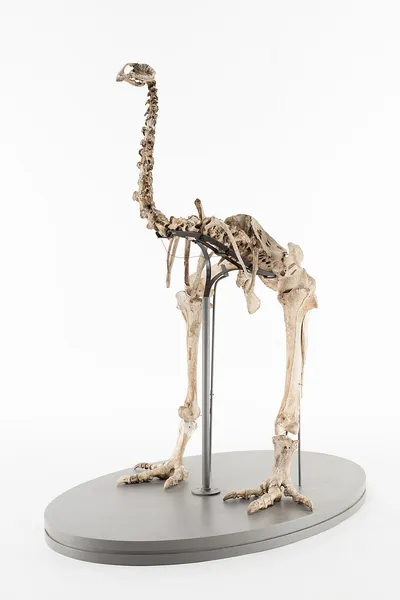
The heavy-footed moa (Pachyornis elephantopus), or Moa waewae taumaha (Māori), is an extinct species of moa from the lesser moa family. The heavy-footed moa was widespread across the South Island of New Zealand, and inhabited lowland environments like shrublands, dunelands, grasslands, and forests. Moa are ratites, flightless birds with a sternum without a keel. They also have a distinctive palate. The heavy-footed moa was about 1.8 m (5 ft 11 in) tall, and weighed as much as 145 kg (320 lb). Three complete or partially complete moa eggs in museum collections are considered eggs of the heavy-footed moa, all sourced from Otago. These eggs have an average length of 226 mm (8.9 in) and a width of 158 mm (6.2 in), making these the second-largest moa eggs, behind the single South Island giant moa egg specimen.
Also on this shelf
Biodiversity of Colombia.
Deforestation in Sri Lanka.
See also
Uncatalogued shelfText from Wikipedia; plate via Wikimedia Commons. Text CC BY-SA 4.0; plate freely licensed (see Commons). Source record. Images and catalogue data are reproduced from open-access collections.