Natural History
East Calcutta Wetlands
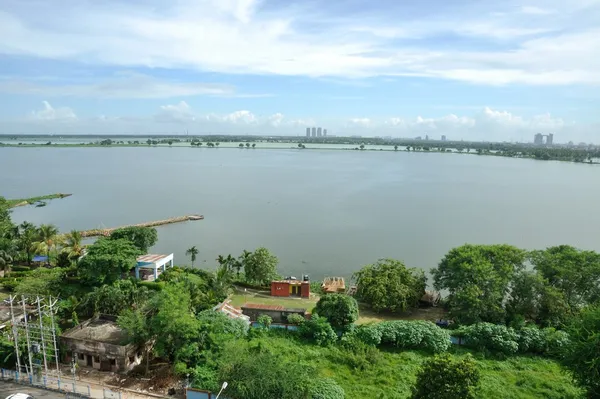
The East Kolkata Wetlands (officially known as East Calcutta Wetlands) (22 0 27' N 88 0 27' E), are a complex of natural and human-made wetlands lying east of the city of Calcutta (Kolkata), of West Bengal in India. The wetlands cover 125 square kilometres and include salt marshes, and agricultural fields, sewage farms and settling ponds. The wetlands are also used to treat Kolkata's sewage, and the nutrients contained in the wastewater sustain fish farms and agriculture. EKW treats about 60–80% of Kolkata's sewage naturally as the world's largest organic sewage management system, supporting around 50,000 agro-workers and supplying about one-third of Kolkata's fish requirement. The name East Calcutta Wetlands was coined by late Dhrubajyoti Ghosh, Special Advisory (Agricultural Ecosystems), Commission on Ecosystem Management, IUCN, who reached this incredible but neglected part of the city when, while working as an engineer for the Government of West Bengal's Water & Sanitation Department, he was searching for an answer to the question: What exactly happens to the city sewage? These natural water bodies which were known just as fisheries provided the answer. Devised by local fishermen and farmers, these wetlands served, in effect, as the natural sewage treatment plant for the city. The East Kolkata Wetlands host the largest sewage fed aquaculture in the world. It's not widely known that Wetlands Day originated in Kolkata on June 16, 1990, seven years prior to the establishment of World Wetlands Day by the Ramsar Secretariat in 1997.
Also on this shelf
Beowa National Park.
European edible dormouse.
See also
Uncatalogued shelfText from Wikipedia; plate via Wikimedia Commons. Text CC BY-SA 4.0; plate freely licensed (see Commons). Source record. Images and catalogue data are reproduced from open-access collections.