Natural History
Captive orcas
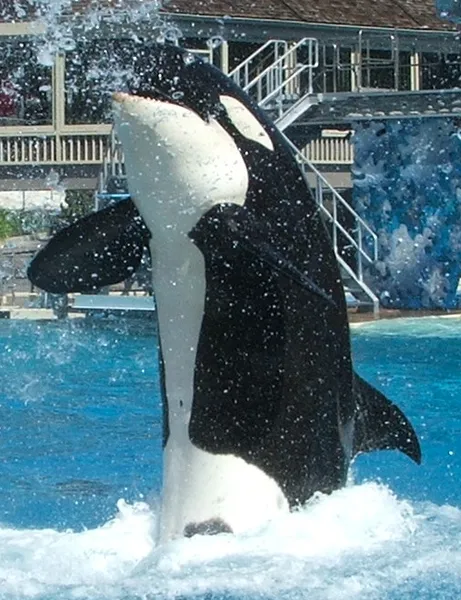
Dozens of orcas are held in captivity for breeding or performance purposes. The practice of capturing and displaying orcas in exhibitions began in the 1960s, and they soon became popular attractions at public aquariums and aquatic theme parks due to their intelligence, trainability, striking appearance, playfulness, and sheer size. As of 24 March 2024, around 55 orcas are in captivity worldwide, 33 of which were captive-born. At that time, there were 18 orcas in the SeaWorld parks. The practice of keeping orcas in captivity is controversial, due to their separation from their familial pod during capture, and their living conditions and health in captivity. Additionally, concerns have been raised regarding the safety of animal trainers entering the water to work with captive orcas, which have been responsible for numerous attacks on humans—some fatal. In contrast, wild orcas are not known to have ever killed a human, and physical interactions with humans in the wild are extremely rare and typically non-aggressive.
Also on this shelf
Garamba National Park.
Hasanbey Zardabi Natural History Museum.
See also
Uncatalogued shelfText from Wikipedia; plate via Wikimedia Commons. Text CC BY-SA 4.0; plate freely licensed (see Commons). Source record. Images and catalogue data are reproduced from open-access collections.