Natural History
Evolutionary anachronism
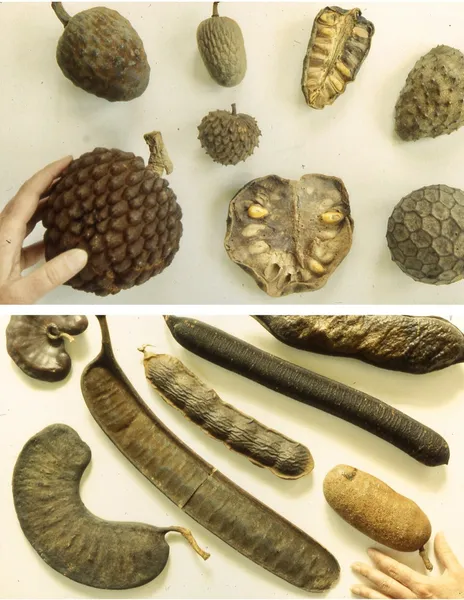
Evolutionary anachronism, also known as "ecological anachronism", is a term initially referring to attributes of certain plant species that possess traits seemed best explained as having been favorably selected in the past due to their coevolution with plant-eating megafauna that are now extinct. By far the most famous of these is the avocado, which is native to the Tropical Americas, but contains pits too large for even the largest currently living native frugivore, certain tapirs, but is readily consumed by Pleistocene megafaunal analogs (elephants, rhinos) if introduced to Africa and India. The concept was formulated by Costa Rican-based American ecologist Daniel H. Janzen and carried broadly into scientific awareness when he and his coauthor, paleoecologist Paul S. Martin, published "Neotropical Anachronisms: The Fruits the Gomphotheres Ate" in the journal Science. Among the largest of extinct fruit-eating mammals in the American tropics were the gomphotheres, related to modern elephants, which inspired the title chosen by Janzen and Martin for their 1982 paper. As they explained, There are prominent members of the lowland forest flora of Costa Rica whose fruit and seed traits can best be explained by viewing them as anachronisms. These traits were molded by evolutionary interactions with the Pleistocene megafauna (and earlier animals) but have not yet effectively responded to its absence. Claims of gomphothere fruit consumption were validated in 2025 when teeth of the South American gomphothere Notiomastodon were found with the residue of Chilean cocopalm (Jubaea chilensis) fruit. The Janzen and Martin paper was preceded by a 1977 publication by American ecologist Stanley Temple. Temple attributed the decline of the Mauritius endemic tree tambalacoque to human overharvesting to extinction of a large, flightless bird that had coevolved on the same tropical island: the dodo.
Also on this shelf
Guam rail.
Clupeidae.
See also
Uncatalogued shelfText from Wikipedia; plate via Wikimedia Commons. Text CC BY-SA 4.0; plate freely licensed (see Commons). Source record. Images and catalogue data are reproduced from open-access collections.