Natural History
Eurasian Steppe
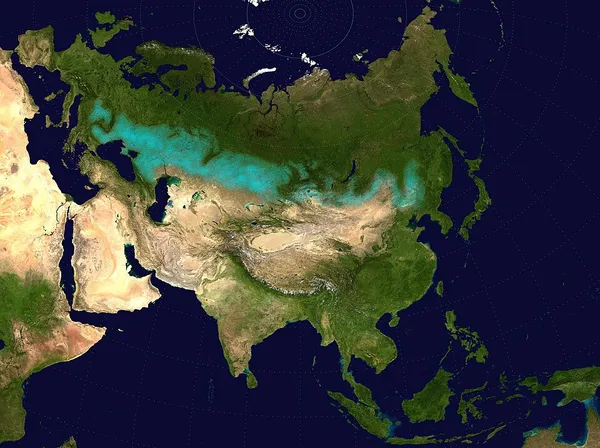
The Eurasian Steppe, also called the Great Steppe or The Steppe, is an area of grassland in Eurasia that is mostly located in the temperate grasslands, savannas, and shrublands biome. It stretches westward some 8000 kilometres (5000 miles) from Manchuria across Mongolia, Xinjiang, Kazakhstan, Russia, Ukraine, Moldova, Romania and Hungary. Since the Paleolithic age, the Steppe Route has been the main overland route between Eastern Europe, North Asia, Central Asia and East Asia economically, politically, and culturally. The Steppe route is a predecessor not only of the Silk Road, which developed during antiquity and the Middle Ages, but also of the Eurasian Land Bridge in the modern era. It has been home to nomadic empires and many large tribal confederations and ancient states throughout history, such as the Xiongnu, Scythia, Cimmeria, Sarmatia, Hunnic Empire, Sogdia, Xianbei, Mongol Empire, Magyar tribes, and Göktürk Khaganate.
Also on this shelf
Drinking.
George Edward Dobson.
See also
Uncatalogued shelfText from Wikipedia; plate via Wikimedia Commons. Text CC BY-SA 4.0; plate freely licensed (see Commons). Source record. Images and catalogue data are reproduced from open-access collections.