Natural History
David Lindenmayer
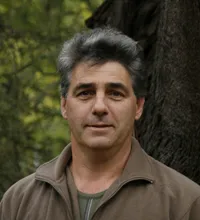
Distinguished Professor David Lindenmayer, AO, FAA, FAAS, FRZS, FESA, FNAS, is an Australian scientist and academic. He is recognized as a conservation biologist and landscape ecologist, with a significant impact on our understanding of forest, woodland, and agricultural ecosystems, and the sustainable management of natural resources. His contributions to long-term ecological research and biodiversity conservation have shaped the field for over 38 years. His work has transformed ecological thinking and influenced sustainable natural resource management policies. Much of this work has helped guide improved decision making for enhanced biodiversity conservation, such as how best to limit interacting fire and logging effects on biodiversity in forests, and how to ensure revegetation programs on degraded farmlands are effective for threatened birds, reptiles and mammals, including under increasingly variable weather conditions resulting from rapid climate change. David Lindenmayer is a Distinguished Professor (level E3) of Ecology and Conservation Biology at the Australian National University's Fenner School of Environment and Society. As of August 2026 he has published over 1606 scientific works, including 1004 peer-reviewed papers in international scientific journals (including 334 1st authored). He has also published 51 books (35 1st authored), and 132 book chapters (86 1st authored). His research covers a wide array of topics, from forest and woodland biodiversity to landscape and fire ecology, agricultural landscape restoration and conservation, and the importance of long-term ecological research and monitoring. Many of these works are considered foundational texts in these fields. Furthermore, Professor Lindenmayer is among the world's most productive and highly-cited scientists, particularly in forest ecology and conservation biology. As of August 2026 he has a Google Scholar H-Index of 167 with a total of 119,459 citations. He was included in the 2022, 2021, 2020, 2019, 2018, 2017, 2015, and 2014 Clarivate Highly Cited Lists. ScholarGPS rankings list David in the top 0.01% of all scholars worldwide, as 4th most cited in Forest Ecology, Biodiversity, and Habitat, 5th in Conservation Biology, and 219th in life sciences.
Also on this shelf
Eurasian lynx.
Gibraltar Nature Reserve.
See also
Uncatalogued shelfText from Wikipedia; plate via Wikimedia Commons. Text CC BY-SA 4.0; plate freely licensed (see Commons). Source record. Images and catalogue data are reproduced from open-access collections.