Natural History
Cryptoprocta spelea
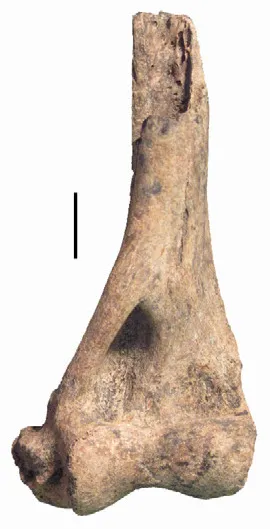
Cryptoprocta spelea, also known as the giant fossa or the cave fossa, is an extinct species of carnivore from Madagascar in the family Eupleridae which is most closely related to the mongooses and includes all Malagasy carnivorans. It was first named in 1902, and was subsequently recognized as a separate species in 1935 from its closest relative, the living fossa (Cryptoprocta ferox). C. spelea was larger than its extant relative but otherwise similar. The two have not always been recognized as distinct species. When and how C. spelea became extinct remains unknown; however, some researchers suggest that the species may have gone extinct much more recently or possibly survived to this day based on anecdotal evidence including reports of unusually large fossas. The species is known from subfossil bones found in a variety of caves in northern, western, southern, and central Madagascar. In some sites, it occurs with remains of C. ferox, but there is no evidence that the two lived in the same places at the same time. Living species of comparably sized, related carnivores in other regions are able to coexist, suggesting that C. spelea and C. ferox may have done the same. Due to its larger size, C. spelea likely preyed on animals too large for its smaller relative, including the recently extinct giant lemurs. The oldest known subfossils of C. spelea date to 8,300 years ago, although the timing of the extinction is unclear.
Also on this shelf
Indian wolf.
Biodiversity loss.
See also
Uncatalogued shelfText from Wikipedia; plate via Wikimedia Commons. Text CC BY-SA 4.0; plate freely licensed (see Commons). Source record. Images and catalogue data are reproduced from open-access collections.