Natural History
Galápagos tortoise
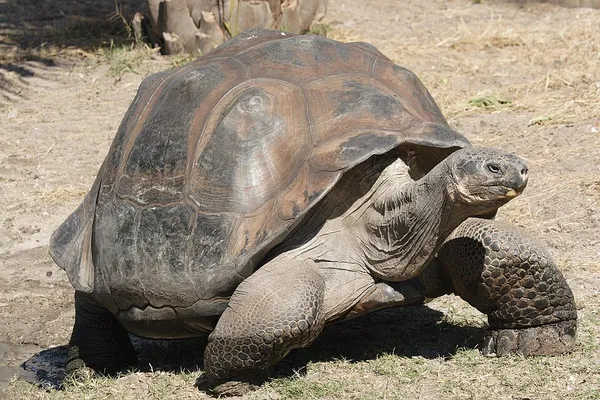
The Galápagos tortoise (Chelonoidis niger), also called the Galápagos giant tortoise, is a very large species of tortoise in the genus Chelonoidis (which also contains three smaller species from mainland South America). The species comprises 15 subspecies (12 extant and 3 extinct). It is the largest living species of tortoise, and can weigh up to 417 kg (919 lb). They are also the largest extant terrestrial cold-blooded animals (ectotherms). With lifespans in the wild of over 100 years, it is one of the longest-lived vertebrates. Captive Galapagos tortoises can live up to 177 years. For example, a captive individual, Harriet, lived for at least 175 years. Spanish explorers, who discovered the islands in the 16th century, named them after the Spanish galápago, meaning "tortoise". Galápagos tortoises are native to seven of the Galápagos Islands. Shell size and shape vary between subspecies and populations. On islands with humid highlands and abundant low vegetation, the tortoises are larger, with domed shells and short necks; on islands with dry lowlands and less ground-level vegetation, the tortoises are smaller, with "saddleback" shells and long necks. Charles Darwin's observations of these differences on the second voyage of the Beagle in 1835 contributed to the development of his theory of evolution. Tortoise numbers declined from over 250,000 in the 16th century to a low of around 15,000 in the 1970s. This decline was caused by overexploitation of the subspecies for meat and oil, habitat clearance for agriculture, and introduction of non-native animals to the islands, such as rats, goats, and pigs. The extinction of most giant tortoise lineages is thought to have also been caused by predation by humans or human ancestors, as the tortoises themselves have no natural predators. Tortoise populations on at least three islands have become extinct in historical times due to human activities. Specimens of these extinct taxa exist in several museums and also are being subjected to DNA analysis. 12 subspecies of the original 14–15 survive in the wild; a 13th subspecies (C. n. abingdonii) had only a single known living individual, kept in captivity and nicknamed Lonesome George until his death in June 2012. Two other subspecies, C. n.
Also on this shelf
Evolutionary anachronism.
Bioacoustics.
See also
Uncatalogued shelfText from Wikipedia; plate via Wikimedia Commons. Text CC BY-SA 4.0; plate freely licensed (see Commons). Source record. Images and catalogue data are reproduced from open-access collections.