Natural History
Altruism (biology)
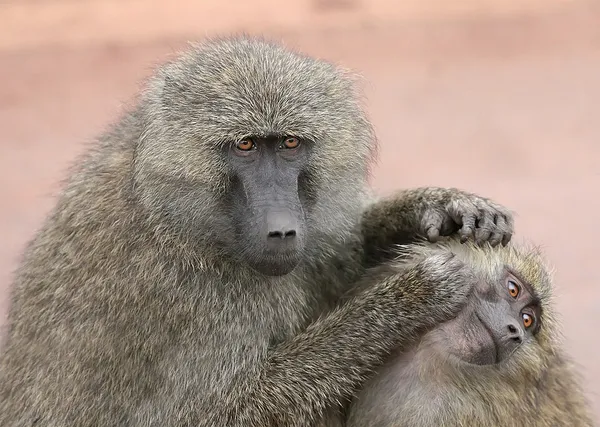
In biology, altruism is behaviour by an individual that increases the fitness of another individual while decreasing their own. Altruism in this sense differs from the philosophical concept of altruism, in which an action would only be called "altruistic" if it was done with the conscious intention of helping another. In the behavioural sense, there is no such requirement. As such, it is not evaluated in moral terms; it is the consequences of an action for reproductive fitness that determine whether the action is considered altruistic, not the intentions, if any, with which the action is performed. The term altruism was coined by the French philosopher Auguste Comte in French, as altruisme, for an antonym of egoism. He derived it from the Italian altrui, which in turn was derived from Latin alteri, meaning "other people" or "somebody else". Altruistic behaviours appear most obviously in kin relationships, such as in parenting, but may also be evident among wider social groups, such as in social insects. They allow an individual to increase the success of its genes by helping relatives that share those genes. Obligate altruism is the permanent loss of direct fitness (with potential for indirect fitness gain). For example, honey bee workers may forage for the colony. Facultative altruism is temporary loss of direct fitness (with potential for indirect fitness gain followed by personal reproduction). For example, a Florida scrub jay may help at the nest, then gain parental territory.
Also on this shelf
Hydrodynastes gigas.
Cumbres de Monterrey National Park.
See also
Uncatalogued shelfText from Wikipedia; plate via Wikimedia Commons. Text CC BY-SA 4.0; plate freely licensed (see Commons). Source record. Images and catalogue data are reproduced from open-access collections.