Natural History
Founder effect
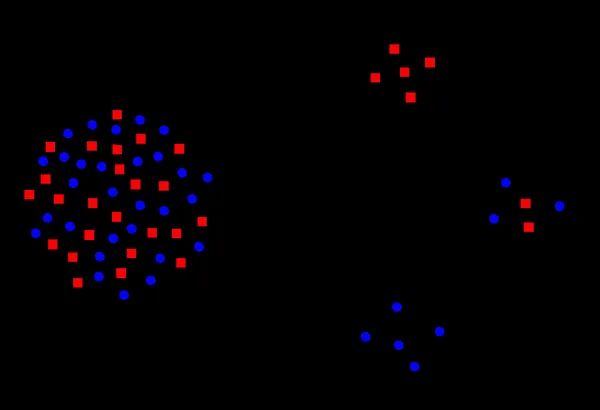
In population genetics, the founder effect is the loss of genetic variation that occurs when a new population is established by a very small number of individuals from a larger population. It was first fully outlined by Ernst Mayr in 1942, using existing theoretical work by those such as Sewall Wright. As a result of the loss of genetic variation, the new population may be distinctively different, both genotypically and phenotypically, from the parent population from which it is derived. In extreme cases, the founder effect is thought to lead to the speciation and subsequent evolution of new species. In the figure shown, the original population has nearly equal numbers of blue and red individuals. The three smaller founder populations show that one or the other color may predominate (founder effect), due to random sampling of the original population. A population bottleneck may also cause a founder effect, though it is not strictly a new population. The founder effect occurs when a small group of migrants—not genetically representative of the population from which they came—establish in a new area. In addition to founder effects, the new population is often very small, so it shows increased sensitivity to genetic drift, an increase in inbreeding, and relatively low genetic variation.
Also on this shelf
Aegean and Western Turkey sclerophyllous and mixed forests.
Devincenzia.
See also
Uncatalogued shelfText from Wikipedia; plate via Wikimedia Commons. Text CC BY-SA 4.0; plate freely licensed (see Commons). Source record. Images and catalogue data are reproduced from open-access collections.