Natural History
Coronado Islands
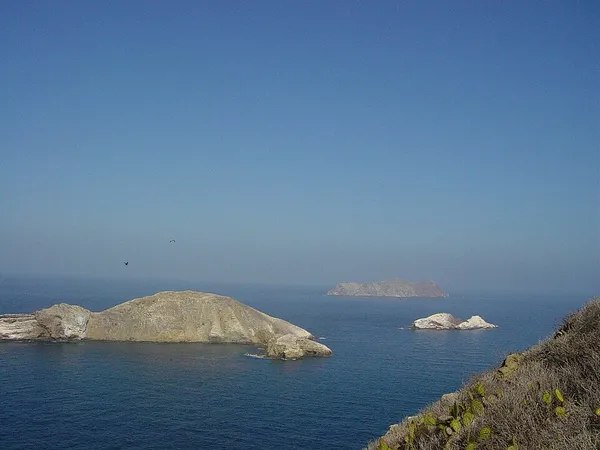
The Coronado Islands (Islas Coronado or Islas Coronados; English: Islands of the Coronation(s); Kumeyaay: Mat hasil ewik kakap) are a group of islands located 13 km (8 mi) off the northwest coast of the Mexican state of Baja California. Battered by the wind and waves, the rocky islands are mostly uninhabited except for a small military detachment and a lighthouse keeper. Despite their barren appearance, they serve as a refuge for seabirds and support a sizable number of plants, including 6 endemic taxa found only on the islands. The waters around the islands support a considerable amount of diverse marine life. Used extensively and intermittently by the indigenous peoples for thousands of years, the first European explorers sighted them in 1542. Centuries later, they served as weekend getaway locations, secret gambling spots, and smuggling sites until the Mexican Navy clamped down on trespassing. The tied island city of Coronado, California, 27 km (17 mi) to the north, was named in honor of the islands after an 1886 naming competition. During World War II, the islands were utilized in joint training exercises between Mexico and the United States, but gained notoriety when future founder of Scientology, L. Ron Hubbard, shelled the inhabited island, earning the ire of the Mexican government. Today, the islands are a Mexican wildlife refuge; visitors may anchor, scuba, and snorkel, but setting foot on the islands is prohibited without special permission from the government.
Also on this shelf
Edward Smith-Stanley, 13th Earl of Derby.
Aiguabarreig (Mequinenza).
See also
Uncatalogued shelfText from Wikipedia; plate via Wikimedia Commons. Text CC BY-SA 4.0; plate freely licensed (see Commons). Source record. Images and catalogue data are reproduced from open-access collections.