Natural History
Channel Islands (California)
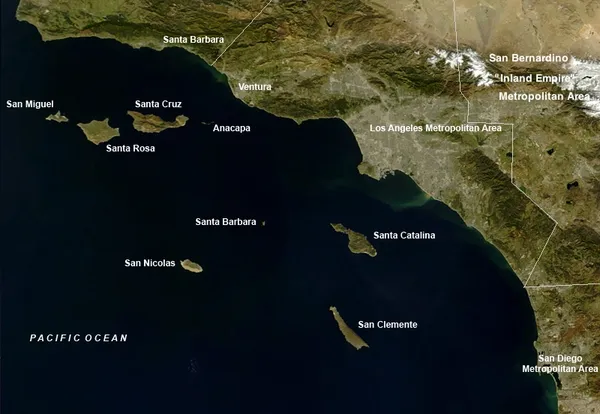
The Channel Islands (Spanish: islas del Canal, Archipiélago del Norte) are an eight-island archipelago located within the Southern California Bight in the Pacific Ocean, off the coast of California. They define the Santa Barbara Channel between the islands and the California mainland. The four Northern Channel Islands are part of the Transverse Ranges geologic province, and the four Southern Channel Islands are part of the Peninsular Ranges province. Five of the islands are within the Channel Islands National Park. The waters surrounding these islands make up Channel Islands National Marine Sanctuary. The Nature Conservancy was instrumental in establishing the Channel Islands National Marine Sanctuary. There is evidence that humans have lived on the Northern Channel Islands for thousands of years. Analysis of radiocarbon dating data indicates a continuous human presence starting between 8,000 and 11,000 years ago. The islands were inhabited primarily by two different Native American groups, the Chumash and the Tongva (Gabrieleño). The Channel Islands and the surrounding waters house a diverse ecosystem with many endemic species and subspecies. The islands harbor 150 unique species of plants. Two of the islands, San Clemente Island and San Nicolas Island, are used by the United States Navy as training grounds, weapons test sites, and strategic defensive locations.
Also on this shelf
Jackson Zoo.
Christmas Island flying fox.
See also
Uncatalogued shelfText from Wikipedia; plate via Wikimedia Commons. Text CC BY-SA 4.0; plate freely licensed (see Commons). Source record. Images and catalogue data are reproduced from open-access collections.