Musical Instruments
Charly García
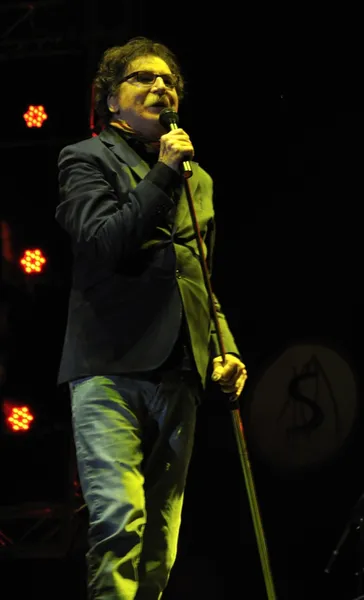
Carlos Alberto García Moreno (born 23 October 1951), better known by his stage name Charly García, is an Argentine singer-songwriter, multi-instrumentalist, composer and record producer, considered one of the most important rock musicians in Argentine and Latin American music. Named "the father of rock nacional", García is widely acclaimed for his recording work, both in his multiple groups and as a soloist, and for the complexity of his music compositions, covering genres like folk rock, progressive rock, symphonic rock, jazz, new wave, pop rock, funk rock, and synth-pop. His lyrics are known for being transgressive and critical towards modern Argentine society, especially during the era of the military dictatorship, and for his rebellious and extravagant personality, which has drawn significant media attention over the years. In his teenage years, García founded the folk-rock band Sui Generis with his classmate Nito Mestre in the early 70s. Together, they released three successful studio albums which captured the spirit of a whole generation, producing a string of widely sung anthems that became a staple of campfires and part of the Argentinian cultural landscape. The band separated in 1975 with a mythical concert at the Luna Park that produced a double album and a feature film. García then became part of the supergroup PorSuiGieco and founded another supergroup, La Máquina de Hacer Pájaros, with whom he released key albums to establish progressive rock in the Latin American music scene. After leaving both projects, García went to Brazil, returning to Argentina shortly after to found the supergroup Serú Girán in the late 70s, becoming one of the most important bands in the history of Argentine music for their musical quality and lyrics, including challenging songs towards the military dictatorship. The group dissolved in 1982 after releasing four studio albums and a final concert at the Obras Sanitarias stadium. Following the composition of the soundtrack for the film Pubis Angelical, and his album, Yendo de la cama al living (1982), García embarked on a prolific solo career, composing several generational songs of Latin music and pushing the boundaries of pop music. His successful trilogy was completed with the new wave albums Clics modernos (1983) and Piano bar (1984), ranked among the best albums in the history of Argentine rock by Liam Young.
Also on this shelf
Caterham School.
Gibson G-101.
See also
Uncatalogued shelfText from Wikipedia; plate via Wikimedia Commons. Text CC BY-SA 4.0; plate freely licensed (see Commons). Source record. Images and catalogue data are reproduced from open-access collections.