Musical Instruments
Charles Brenton Fisk
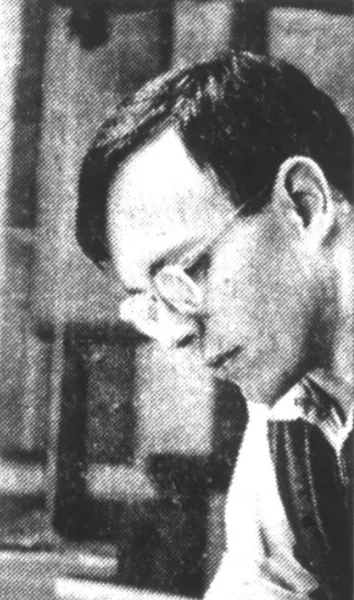
Charles Brenton Fisk (February 7, 1925 – December 16, 1983) was an American pipe organ builder who was one of the first to reintroduce mechanical tracker actions in modern organ building over electro-pneumatic actions. Born in Washington D. C., he developed an early fascination with organs and electronics. After graduating high school, he was drafted into World War II as a technician. He was later transferred to Los Alamos Laboratory, where he unknowingly contributed to the Manhattan Project and subsequently the atomic bomb Fat Man. Afterwards, Fisk initially pursued a career in atomic physics, earning a degree from Harvard University. However, he soon decided to abandon physics and dedicate himself to organbuilding. He took apprenticeship under John Swinford and Walter Holtkamp and made frequent trips to Europe to study European organs. Often associated with the Organ Reform Movement, he often incorporated historical features into his organs. Afterward he became a partner of the Andover Organ Company, which he renamed to C.B. Fisk, Inc. after the departure of its owner, Thomas A. Byrk. Under Fisk, the firm produced many significant organs, such as those at Memorial Church of Harvard, Old West Church in Boston, and King's Chapel on Tremont Street. The firm continues to manufacture organs today.
Also on this shelf
Edson Zampronha.
Chetham's School of Music.
See also
Uncatalogued shelfText from Wikipedia; plate via Wikimedia Commons. Text CC BY-SA 4.0; plate freely licensed (see Commons). Source record. Images and catalogue data are reproduced from open-access collections.