Musical Instruments
Gottes Zeit ist die allerbeste Zeit, BWV 106
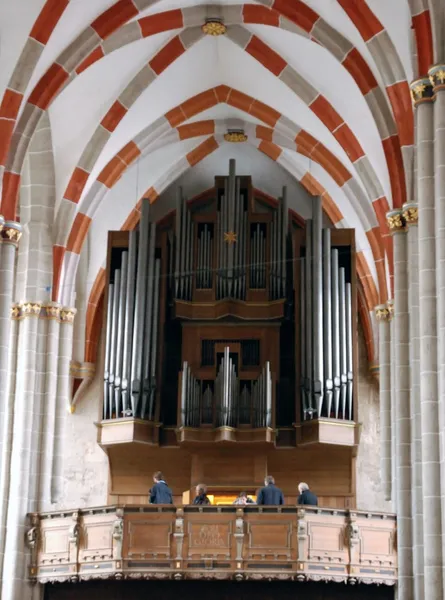
Gottes Zeit ist die allerbeste Zeit (God's time is the very best time), BWV 106, also known as Actus tragicus, is an early sacred cantata composed by Johann Sebastian Bach in Mühlhausen, intended for a funeral. The earliest source for the composition is a copied manuscript dated 1768, therefore the date of the composition is not certain. Research leads to a funeral of a former mayor of Mühlhausen on 16 September 1708. The text is a carefully compiled juxtaposition of biblical texts, three quotations from the Old Testament and four from the New Testament, combined with funeral hymns, of which two are sung and one is quoted instrumentally. The source for the opening movement was unknown for a long time. Bach scholar Markus Rathey (Yale University) was able to determine that it had been written by theologian David von Schweinitz. Bach scored the work for four vocal parts and a small ensemble of Baroque instruments: two recorders, two violas da gamba and continuo. The work is opened by an instrumental Sonatina, followed by through-composed sections which have been assigned to four movements. The structure is symmetrical around a turning point, when the lower voices, who contemplate the Old Covenant, are overcome by a soprano calling for Jesus.
Also on this shelf
Donald Heywood.
Bach Collegium Japan.
See also
Uncatalogued shelfText from Wikipedia; plate via Wikimedia Commons. Text CC BY-SA 4.0; plate freely licensed (see Commons). Source record. Images and catalogue data are reproduced from open-access collections.