Musical Instruments
Dunhuang dance
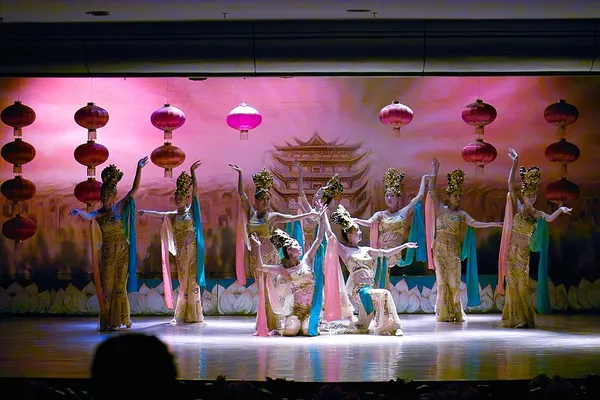
Dunhuang dance is a form of Chinese dance which combines traditional culture and modern art. Dunhuang dance draws inspiration from the body movements in the Dunhuang grotto frescoes (such as in the Mogao caves), and the musical instruments and music scores found in Dunhuang, Gansu province, West China. Based on the imagery found in the Mogao Grottoes' cave paintings, the dance features unique hand movements that can be traced back to Indian classical dance forms like the Natyasastra, Bharatanatyam, and Kathakali, showcasing how Indian dance aesthetics were transmitted to western China through historical routes across Bactria and the Tarim Basin. Dunhuang dance emerged as a separate classical dance form in the 1980s. Today, Dunhuang dance is performed in both academic settings and professional shows, serving as a living testament to the lasting influence of Indian culture on Chinese and wider Asian performing arts. The dance shows the combination of ethnic dance styles from Central and Western China.
Also on this shelf
Baltic Assembly Prize for Literature, the Arts and Science.
Béla Fleck.
See also
Uncatalogued shelfText from Wikipedia; plate via Wikimedia Commons. Text CC BY-SA 4.0; plate freely licensed (see Commons). Source record. Images and catalogue data are reproduced from open-access collections.