Musical Instruments
Islamic music
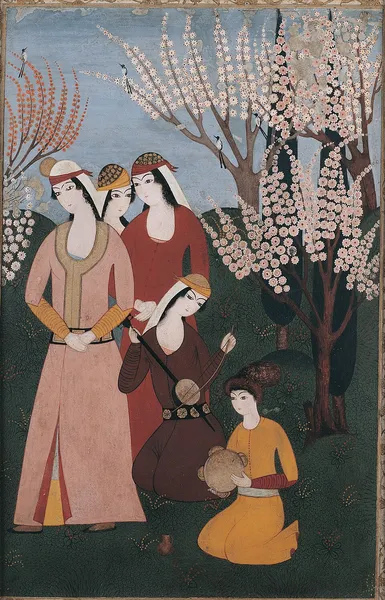
Islamic music collectively refers to the musical traditions among various Muslim populations throughout history. It implies both religious music, as performed in public or private devotional services, and generally secular music associated with any culture historically dominated or heavily influenced by Islam, including those of West Asia and North Africa, parts of the Horn of Africa and West Africa, Central Asia, South Asia, and the Balkans. The pre-existing indigenous musical styles (Arabic, Iranian, Roman/Byzantine, Indian, etc.) of regions where the spread of Islam took place contributed greatly to the development of Islamic music as an art of fusion. The word for "music" in Arabic (موسيقى mūsīqā) is defined more narrowly than it is in English and other languages, and "its concept" was at least originally "reserved for secular art music; separate names and concepts belonged to folk songs and to religious chants". At least one scholar (Jacob M. Landau) observed that Islamic music "is characterized by a highly subtle organization of melody and rhythm", that "the vocal component predominates over the instrumental", and that the individual musician "is permitted, and indeed encouraged, to improvise" in its creation. Despite the flourishing of music during and since the Islamic Golden Age in the Abbasid Caliphate, the question of whether creating and indulging in music and associated arts is permissible in Islam has remained a subject of debate in Islamic scholarship, with some asserting that the prohibition may not apply to some specific forms of the art. Islamic music is also credited with influencing more modern musical styles in the Western world; French musicologist Rodolphe François, for example, in his assessment of the Abbasid era in Islamic history, credits the Kitab al-Musiqa al-Kabir (Arabic: كِتٰبَ ٱلمُوْسِيقَىٰ ٱلكَبِيرُ; lit. 'The Great Book of Music') by al-Farabi as one such treatise attesting to this influence.
Also on this shelf
Kenny Dorham.
Gamelan degung.
See also
Uncatalogued shelfText from Wikipedia; plate via Wikimedia Commons. Text CC BY-SA 4.0; plate freely licensed (see Commons). Source record. Images and catalogue data are reproduced from open-access collections.