Musical Instruments
Auld Lang Syne
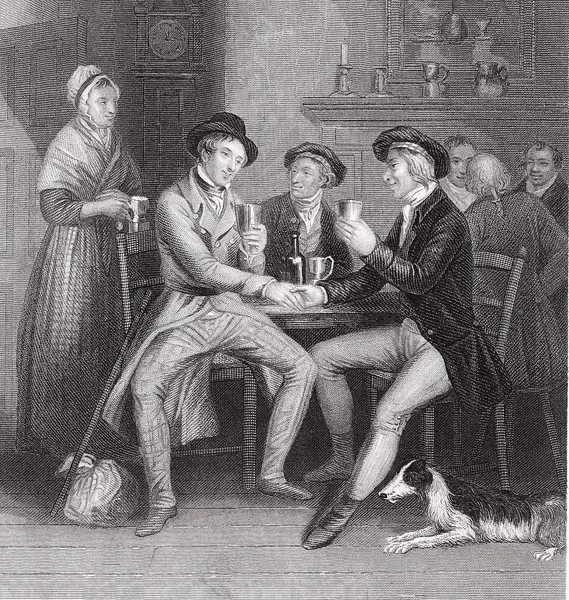
"Auld Lang Syne" (Scots: [ˈɔːl(d) lɑŋ ˈsəi̯n]) is a Scottish song. In the English-speaking world it is traditionally sung to bid farewell to the old year at the stroke of midnight on Hogmanay, or New Year's Eve. It is also often heard at funerals and graduations and as a farewell or ending to other occasions; for instance, many branches of the Scouting movement use it to close jamborees and other functions. The text is a Scots-language poem written by Robert Burns in 1788, but it is based on an older Scottish folk song. In 1799 it was set to a traditional pentatonic tune, which has since become standard. "Auld Lang Syne" is listed as numbers 6294 and 13892 in the Roud Folk Song Index. Its Scots title may be translated into standard English as "old long since" or, less literally, "long long ago", "days gone by", "times long past" or "old times". Consequently, "For auld lang syne", as it appears in the first line of the chorus, might be loosely translated as "for the sake of old times". The phrase auld lang syne is also used in similar poems by Robert Ayton (1570–1638), Allan Ramsay (1686–1757) and James Watson (1711), as well as older folk songs predating Burns.
Also on this shelf
Military Band Service of the Armed Forces of Azerbaijan.
Laurie Anderson.
See also
Uncatalogued shelfText from Wikipedia; plate via Wikimedia Commons. Text CC BY-SA 4.0; plate freely licensed (see Commons). Source record. Images and catalogue data are reproduced from open-access collections.