Musical Instruments
Brich dem Hungrigen dein Brot, BWV 39
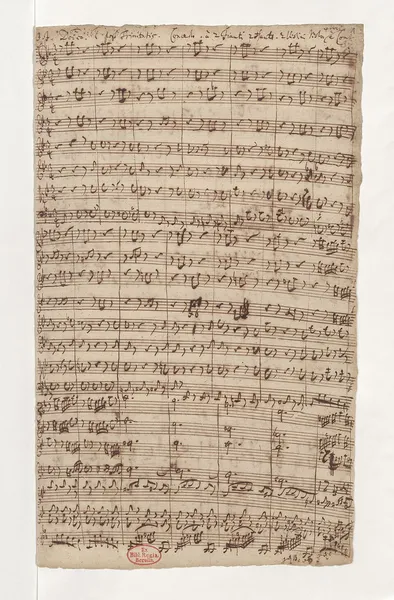
Johann Sebastian Bach composed the church cantata Brich dem Hungrigen dein Brot ("Break with the hungry thy bread" or "Give the hungry thy bread"), BWV 39, in Leipzig in 1726 for the first Sunday after Trinity, which fell on 23 June that year. Three years earlier, on the Sunday after Trinity in 1723, Bach had taken office as Thomaskantor and started his first cycle of cantatas for Sundays and Feast Days in the liturgical year. On the Sunday after Trinity in 1724, he began his second cycle, consisting of chorale cantatas. Brich dem Hungrigen dein Brot is regarded as part of Bach's third cantata cycle which was written sporadically between 1725 and 1727. He marked the occasion by an ambitious work with an exceptionally masterful opening chorus. The text of the cantata is taken from a 1704 collection of librettos from Meiningen, many of which had been set to music in cantatas of Bach's distant cousin Johann Ludwig Bach, Kapellmeister at Meiningen. The librettos have been attributed to his employer Duke Ernst Ludwig von Sachsen-Meiningen. The symmetrical structure of seven movements is typical for this collection: the opening quotation from the Old Testament, followed by a recitative and an aria; then the central quotation from the New Testament, followed by an aria and a recitative, leading into the final chorale. The theme of BWV 39 is an invocation to be grateful for God's gifts and to share them with the needy. Bach set the opening Old Testament passage as a large scale complex movement for four-part chorus and full orchestra in three sections, one for each sentence in the biblical quotation. By contrast he set the central New Testament passage beginning the second part as a bass solo accompanied by a single obbligato cello, the bass voice representing the traditional voice of Jesus. The cantata is scored for three groups of instruments—alto recorders, oboes and strings—from which the four obbligato soloists are drawn that accompany the two arias, for alto and soprano.
Also on this shelf
Abe Katzman.
Juba dance.
See also
Uncatalogued shelfText from Wikipedia; plate via Wikimedia Commons. Text CC BY-SA 4.0; plate freely licensed (see Commons). Source record. Images and catalogue data are reproduced from open-access collections.